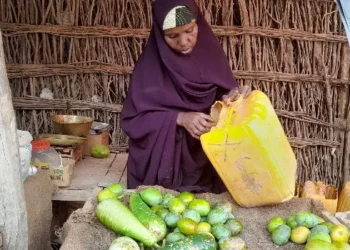


(ERGO) – Farmers in Middle Shabelle have reaped their biggest harvest in five years but are struggling to sell their produce as the local market is flooded.
After a lot of rainfall during the last deyr season the irrigation farmers around the river Shabelle brought in bumper crops of the staples maize, sesame and beans.
The bumper harvest should be a cause for celebration, as it follows on from the destruction of many acres of crops in the area in the El Nino floods that occurred last November.
However, local farmer Mohamed Olow Muddey is finding the apparent blessing has turned sour.
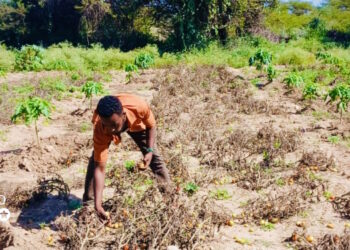
He has just harvested 100 bags of maize from his six hectare farm, which is double the amount last year.
“Last year, I harvested 50 bags and I sold each madaal [local measure of grain equivalent to about 1,200 g] at Sosh 6,000 but today one madaal is fetching only Sosh 3,800,” he complained.
The flooding of the river Shabelle last year destroyed all the maize, beans and sesame as well as tomatoes and pumpkins that he had planted on four hectares of his farm in Raqeyle, seven km east of Jowhar.
He now feels his effort in replanting has been in vain. “I am not even expecting to recover the capital overheads that I have spent twice in a row on the inputs to my farm,” he said.
Many farmers in the area are feeling weary about having to gear up to plant again ahead of the gu’ rainy season, which is expected to start next month.
Mumin Farah Barise, a farmer, appealed to aid agencies to buy up the stocks from farmers in the region to use as food aid elsewhere.
He called on regional stakeholders and the Ministry of Agriculture of the Federal Government of Somalia to contribute towards finding better and more stable markets for their produce.
Middle Shabelle, one of the most agriculturally productive regions in Somalia, had been exporting produce to neighbouring Hiran and further afield to Puntland. This year, however, Hiran has also had high local production. Poor roads and high transport costs have made it unprofitable to market in Puntland.
Some farming families in Middle Shabelle, meanwhile, are now unable to afford school fees for their children. Mohamed Olow has pulled the oldest three of his 10 children out of high school.
“I incurred $90 in fees arrears over the last three months and the teachers have refused to bear with me any longer,” he said. High school fees are $10 per month for each child.
Duniyo Farah Hassan, who has been trading in farm produce for seven years, told Radio Ergo that she was unable to make ends meet. She used to count on selling at least four sacks of locally harvested grain in smaller amounts, but this season she was finding it hard to sell the contents of only one sack.
“Even if they buy one sack of grain from me, I would only be able to make a profit of less than $1 from it,” she complained.