

(ERGO) – Severe water shortage caused by broken boreholes in Hagadera refugee camp in Dadaab, northern Kenya, have left thousands of families struggling with hunger, thirst, and worsening living conditions.
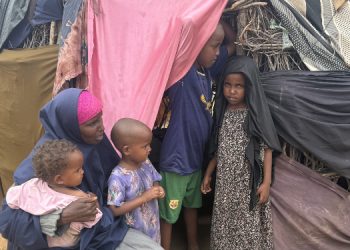
Nimo Isse Roba, a refugee in the camps, says her family struggles to cook because she can no longer walk the three kilometres to the nearest functioning well to lug 20-litre containers home on her back every day.
“I couldn’t light the cooking fire because there is no water. Should the water be used for drinking, bathing the children, or cooking? We can’t even divide it among those needs.
Tonight my children are sleeping hungry because I have no water. Yesterday I carried one jerrycan from the far end of Hagadera market. Since this morning I have had a terrible headache and cannot move,” she told Radio Ergo’s local reporter.
Nimo is among 120,000 refugees affected by the water crisis that began last December, according to camp authorities who spoke to Radio Ergo. Several boreholes that supply the camp have broken down, and repairs have not been completed.
The water shortage has also destroyed Nimo’s small income, as she was relying on cash jobs washing clothes for other families in the camp.
“When there was water I used to go out every morning to wash clothes for people. But now the water is gone. My children are still young and cannot fetch water for me. My oldest is only 10 and he goes to Koranic school,” she said.
She has not been making 4,000 to 5,000 Kenyan shillings from laundry work since December because of the water crisis that impact every aspect of life.
“The thirst is very bad. I can sometimes get food because a relative might give us something. Tonight I even have food in the house, but I have no water to cook it,” she complained.
Nimo, whose family fled Kismayo in Lower Juba region in 2020 due to insecurity, said she hopes the damaged borehole near her home will be repaired soon, as it provided free water and was the main source for families in her neighbourhood.
The water shortages are hitting the most vulnerable residents the hardest, including elderly people and those living with disabilities who have little support.
Hassan Abdullahi Khamis, a refugee father of six with a leg injury, spends around four hours travelling to collect water for his family due to his limited mobility. Every second day he manages to bring back less than 20 litres, dragging the containers slowly along the ground.
“The water shortage is hurting my family badly. I am disabled and the well we used before is broken. I tie two containers together and drag them along the ground from far away. It is very exhausting, but we have no other choice,” Hassan said.
The water he brings home is barely enough for drinking and cooking once a day. Hygiene has become impossible.
“We cannot talk about cleanliness when we do not even have drinking water,” he said. “How will we wash clothes, bathe the children, or use the toilet? We fear diseases like cholera because there is no hygiene.”
Hassan had to stop the construction jobs he was reliant on as an income because he now spends most of his time searching for water. To survive, he has started taking food on credit from small shops where he was once a regular customer.
Hassan’s family arrived in Dadaab after fleeing fighting in Jamame district many years ago during Somalia’s state collapse.
Camp officials say at least four boreholes have broken down over the past year, and none has received proper repairs. The situation has worsened with rising temperatures increasing water demand.
The deputy chairman of Hagadera camp, Abukar Sheikh Abdullahi, told Radio Ergo that the camp administration lacks the financial capacity to repair the damaged boreholes.
“The heat has increased significantly and the boreholes that were already producing little water have now stopped working,” he said. “We are facing a serious crisis. Even families who have food can’t cook because they have no water.”
He warned that the situation poses a major risk to public health and daily survival in the camp. The water shortages coincide with reduced aid in Dadaab camps and overall economic decline.