

(ERGO) – More than a year after war broke out in the remote Almiskad mountains in Somalia’s Puntland state, Mahado Cilmi Matan – a widow with 11 children to support – is still displaced from her home and living on the edge without any income.
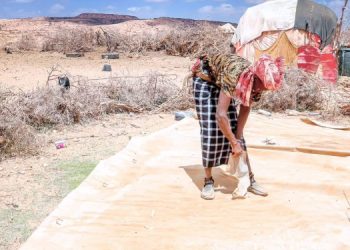
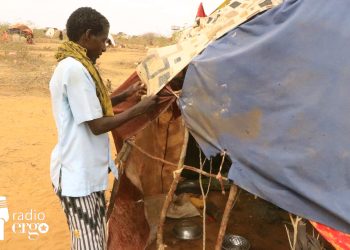
She stays with her children in Hariro in a fragile shelter patched together with cloth, branches, and corrugated iron, since fleeing her mountain village. The hut is too small for her large family and offers little protection from sun and cold. Hariro is a bleak place in rugged terrain and with few amenities.
“There is no food available. We used to survive on our goats, but drought has destroyed our livestock,” Mahado told Radio Ergo.
“We have no work, no income, and no one helping us. Conflict and drought have hit us at the same time.”
The war was launched by Puntland State forces, backed by the United States using airstrikes, to crush the Islamic State group (ISIS) operating from hiding in the highlands in this part of northern Somalia.
Mahado, whose husband died six years ago, has watched 150 of her 180 goats die during the drought. The last animals she herded with her as they fled the conflict in April 2025 are too weak to provide milk, meat, or income – leaving her unable to meet the basic needs of her 11 children.
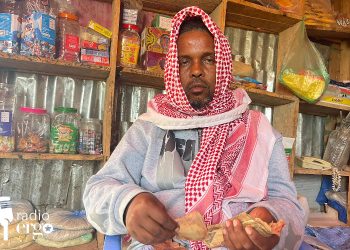
She depends on food bought on credit from local shops in Hariro whenever possible. Nearly a year of borrowing has pushed her debt beyond $1,000, and shopkeepers sometimes refuse to extend further credit.
Water shortages compound her family’s hardship. Local wells around Hariro in Bari region have dried up, forcing communities to use water trucked in from Armo and Bosaso – distances of more than 100 kilometres on poor roads. A single delivery bowser can cost up to $300.
Mahado can’t afford the prices charged and asks neighbours for small amounts of water for the household, also begging livestock owners to let her few goats drink.
“Water is our biggest problem. Even people themselves have nothing to drink,” she said. “We are pastoralists living through a severe drought, and there is nothing to live on now.”
The ongoing conflict in the Almiskad mountains has destroyed homes, water points, and roads. Families are unable to go home to the active warzone, where the latest US airstrikes were carried out in January 2026.
Another mother of nine, Dhudi Guled Hassan, is living in a displacement camp on the outskirts of Barookhle, a small village also in Bari region, surviving on a single daily meal cooked from the remains of a 30-kilogram bag of sorghum she received from local authorities in late December.
“We have no food and no water,” she said. “When we first arrived, we could borrow food, but now everyone is struggling and credit is no longer available.”
Dhudi owes $500 to local shops, and her credit book was closed in January after defaulting on repayments.
Her family lived in Hagar village and relied on rain-fed farming and a small number of goats. Life was always tough but displacement is far worse.
They brought 60 goats with them to Hagar – but 56 have died in the past two months due to lack of pasture, water, and disease. The remaining four goats are weak, and Dhudi fears they may not survive.
Relatives helped them with a single iron-sheet room, which they all cram into. Her husband is a soldier in the Puntland military and doesn’t provide any support to the household.
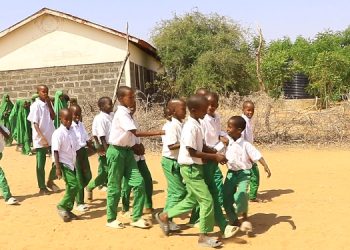
Two of Dhudi’s children have dropped out of education as she was unable to pay the $5 monthly fee per child charged by the school.
“When we said we had no money, the children were sent away,” she said. “They have stayed home for two months without lessons.”
Three of her children recently suffered from fever, cough, and diarrhoea. With no health facility in the camp in Barookhle, and no money for transport, accessing medical care is impossible.
The International Committee of the Red Cross (ICRC) released a report on 22 January 2026 stating that over 200,000 vulnerable families countrywide were struggling to survive after being battered by conflict and displacement.
ICRC official Abdirahman Abdullahi said unexploded mines, dried-up water sources, destroyed farmland, and livestock losses had combined to deepen the suffering of the people affected by the Al Miskad conflict in Puntland.
“For more than a year, people have been living far from their original homes under extremely difficult conditions,” Abdirahman said. “They survive on one meal a day in shelters that offer little protection from heat or cold.”
The ICRC has delivered various medical supplies for treating injured patients to Bosaso and Balidhin hospitals. Among other assistance, it has also provided cash assistance to around 10,000 displaced families in Bari region.