

(ERGO) – Around 500 displaced families in Mogadishu are appealing for help in reconnecting their water, which was cut off in January because they couldn’t pay the bill to the owners of the well supplying the taps in their camp.
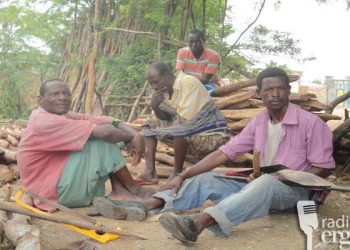
The leader of Beeraley camp in Kahda district, Mohamed Aweys Mohamed, told Radio Ergo that a local businessman had helped them by spending $800 to install pipes from a private well, a water storage tank, and four taps for the camp residents to use.
However, the businessman was not able to support payment of the monthly fee of $100 charged by the well owners. The camp residents couldn’t raise this money either, so on 20 January the well owners cut off the water supply to Beeraley camp.
The camp residents had been using the water since the taps were installed last September.
Mohamed said they had approached other business people to support them paying the water bills but hadn’t had any responses. He is afraid the IDPs could be hit by disease outbreaks resulting from poor hygiene and sanitation, especially as the camp has no toilets.
“We need urgent aid intervention,” the camp leader said. “Their main issue is water shortage. These people were formerly famers and were contributing to the country, and they need help so they can return to their farms.”
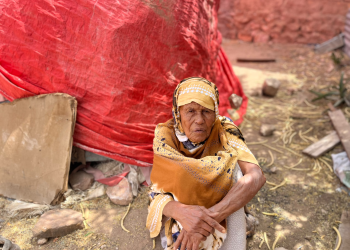
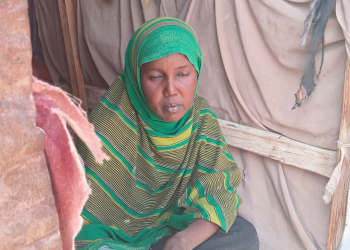
Hajaro Ibrahim Ali, who has been living in Beeraley camp since December, said they had been knocking on random people’s houses in the neighborhood asking for water. Sometimes she walks two kilometres away to carry water back to her shack for one day’s use.
“You have to buy water, if you don’t have the money you beg. We don’t even have the money. Some people will give you water, others won’t. You can imagine how hard it is to knock on people’s doors because we don’t have 1,000 shillings to buy water because we are struggling,” Hajaro said.
“Today we haven’t cooked anything, I took a cup of tea from someone I know well. We are facing hardship, sometimes we get food and sometimes we don’t. You can never get full on food that you beg, you can imagine our problems, and Ramadan is approaching.”
Hajaro is unemployed and spends her time looking after her children and walking around Kahda district begging for food and water. She is a farmer from Dafeed near Wanleweyn in Lower Shabelle, where the family’s two-hectare farm was flooded in November, destroying their maize, sorghum, tomatoes, pepper and watermelons.
As she couldn’t pay back the $500 loan for farm inputs, she decided to abandon her house and farm and bring the children to Mogadishu to seek help.
“We would go back but we don’t have money, we have been in Mogadishu for four months and we are struggling. We don’t even have a mattress, we are sleeping on the ground,” she said.
Since the water was cut off in Beeraley, Ruqiyo Mukhtar Hassan has been struggling to get 20 litres to cover her family’s minimum needs. She does odd jobs and earns very little.
“The water shortage is severe. We go to a different neighborhood every day and they give us some water. We don’t have 1,000 shillings to buy water. We walk for about an hour to get water, it’s difficult.
This morning I carried two jerry cans and my back hurts. We could use five to six jerry cans but we can’t get that amount of water,” she complained.
Ruqiyo said her nine children hadn’t bathed or washed their clothes for a month. Her husband digs waste pits for households making about $1-2 when he gets a job.
“We don’t have food, we cook at night and if we are unlucky to find food, we just sleep. Like today we have not cooked anything. The father has gone out to find a job, if he comes back with money then good, if he doesn’t we will have to just sleep hungry,” she said.
Ruqiyo said she can’t sleep at night worrying about their hardships in the camp. They were displaced from Warmahan village in Lower Shabelle, where their sorghum, maize and sesame seeds were destroyed in floods.
They joined Beeraley last September. She thought at least they would be able to continue to access fresh water from the camp taps.
The camp is located on private land and although the IDPs don’t pay rent, the owners have informed them that they could be evicted at any time. Beeraley has no toilets, nor access to any health or education services.
Most of the IDPs in Beeraley camp are unemployed and fled insecurity and floods in Middle Shabelle and Lower Shabelle regions.