Radio Ergo - Somali Humanitarian News and Information
  • Home
  • Topics
    • Latest Stories
    • IDPS/Refugees
    • Natural Disasters
    • Health
    • Social
    • Food Security
    • Education
    • Agriculture & Livestock
  • Programmes
    • Locust Programme
    • Farming Programme
    • Radio Doctor Programme
    • Women Programme
    • Entertainment Programme
  • About Radio Ergo
  • Contact Us
  • blankSomali
  • blankEnglish
No Result
View All Result
Radio Ergo - Somali Humanitarian News and Information
  • Home
  • Topics
    • Latest Stories
    • IDPS/Refugees
    • Natural Disasters
    • Health
    • Social
    • Food Security
    • Education
    • Agriculture & Livestock
  • Programmes
    • Locust Programme
    • Farming Programme
    • Radio Doctor Programme
    • Women Programme
    • Entertainment Programme
  • About Radio Ergo
  • Contact Us
  • blankSomali
  • blankEnglish
No Result
View All Result
Radio Ergo - Somali Humanitarian News and Information
Home AGRICULTURE & LIVESTOCK

Metal workers going out of business in Burao due to economic and social changes

Radio Ergo by Radio Ergo
June 2, 2023
in AGRICULTURE & LIVESTOCK, FOOD SECURITY, LATEST STORIES
0
Metal workers going out of business in Burao due to economic and social changes

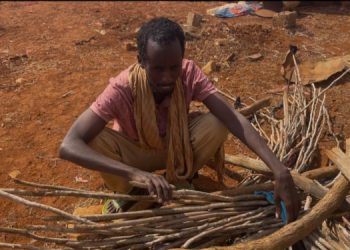
Jama in his metal workshop that is on the verge of closing down/File Photo

0
SHARES
Share on FacebookShare on Twitter

(ERGO) – Since closing down his metal tank workshop last year, Nur Omar Hassan, 45, has been struggling to support his wife and eight children in Burao, Somaliland, and unable to buy food or pay school fees.

For 12 years, he made and sold metal water storage tanks for livestock herders but demand has fallen due to economic hardships and other lifestyle changes.

His workshop closed in June 2022 as there were no orders for the tanks. Nur now does odd jobs carrying goods on his back, earning $3.5 to $5 on a good day in the streets of Burao. His business used to bring him a decent $250 and $300 a month.

“My family used to get all three meals but now we sometimes might miss out even on two meals. You can see there is a big problem. There was progress in my life but now the business has closed things are different – you can see how everything has changed,” he said.

Nur has not been able to find another job and the family has been evicted four times in the last eight months. He currently has house rent of $70 a month and so far has a debt of $80.

He removed his four children from their school in December to cut down on expenses.

“My eldest son was in seventh grade, while the younger ones were in first and second grade. We couldn’t pay the fees and the school said they would send the children home if they haven’t paid. When the situation got tough we decided to remove them from the school,” he explained.

He used to make 10-litre and 20-litre water drums, a skill he learnt on the job, having never been to school.

Within the last three years around seven similar workshops have closed, according to Jama Farah Noor, who runs one of the three remaining businesses that still make these tanks in Burao.

Jama said the purchase of metal tanks has been decreasing in the last four years because of recurring droughts that have wiped out livestock and the hard economic times. The tanks are priced from $15 to $25.

Also, pastoralist families have switched to plastic jerry cans that are cheaper and weigh less.

Jama noted that the conflict in Lasanod had worsened the economic situation as many nomadic pastoralists who normally migrate from Sool have not been able to cross to Togdher due to insecurity.

“When livestock perished due to the drought, that is when business started slowing down. There has been a decline year after year. And now the final straw is the conflict in Lasanod that means people cannot move across easily,” said Jama.

Jama used to employ six people in his workshop but now it is just himself and one other blacksmith. His income of $300 a month has been slashed by three quarters. With his 15-year-old business at its lowest point ever, he fears he may close totally due to poor sales.

“Previously we would make at least 80 tanks a month, 100 pieces at times. Today, we may make 10 or less during the whole month, but those 10 items may not all get sold in one month,” he said.

Farah Saleeban Omar, a livestock herder, stopped using metal tanks after his two camels died in 2017. He bought a donkey to fetch water for his family, but the donkey could not carry the heavy metal jerry cans when full of water.

He switched to plastic drums that cost just $2 and are lighter despite having the same storage capacity.

“The severe drought affected the camels, so people have stopped using the metal drums. People now use donkeys to carry water and they carry less weight,” he said.

Jama currently keeps 50 goats in Ina-afmadoboe, 65 kilometres from Burao. Although he is happy the seasonal rainfall started in his region, he had already lost 90 goats during the drought.

Previous Post

Central Somalia pastoralists happy to get livestock treatment for their herds

Next Post

Camp residents in Dhobley fear diseases after floods destroyed toilets

Related Posts

Families in Merka flounder as mothers lose house plastering work
FOOD SECURITY

Families in Merka flounder as mothers lose house plastering work

January 21, 2026
Women in Kismayo make survival income selling acacia seeds as drought fodder
AGRICULTURE & LIVESTOCK

Women in Kismayo make survival income selling acacia seeds as drought fodder

January 19, 2026
blank
AGRICULTURE & LIVESTOCK

Greenhouse farm in Mogadishu employs displaced rural farming youth

January 16, 2026
Somalia live news, Somalia latest news, Mogadishu live news, Somali news
FF Feedback

Radio Ergo audience feedback report 8-14 Jan 2026

January 15, 2026
blank
IDPS/REFUGEES

Peace deal reconciling warring clans enables families to rebuild lives in Hananbure after five years away

January 14, 2026
Trained midwives keep vital services going as health care declines in Dadaab
HEALTH

Trained midwives keep vital services going as health care declines in Dadaab

January 13, 2026
Next Post
Camp residents in Dhobley fear diseases after floods destroyed toilets

Camp residents in Dhobley fear diseases after floods destroyed toilets

FOLLOW US ON FACEBOOK

DAILY PROGRAMMES

IDAACADDA-22-JAN-2026

IDAACADDA-22-JAN-2026 by Radio Ergo

IDAACADDA-22-JAN-2026
Episode play icon
IDAACADDA-22-JAN-2026
January 22, 2026
Episode play icon
IDAACADDA 21-JAN-2026
January 21, 2026
Episode play icon
IDAACADDA 20-JAN-2026
January 20, 2026
Episode play icon
IDAACADDA 19-JAN-2026
January 19, 2026
Episode play icon
IDAACADDA 17-JAN-2026
January 17, 2026
Search Results placeholder
Radio Ergo Weekly Newsletter
We respect your privacy.
blank
blank
blank

© Copyright 2014 - 2024 Radio Ergo

No Result
View All Result
  • Home
  • Topics
    • Latest Stories
    • IDPS/Refugees
    • Natural Disasters
    • Health
    • Social
    • Food Security
    • Education
    • Agriculture & Livestock
  • Programmes
    • Locust Programme
    • Farming Programme
    • Radio Doctor Programme
    • Women Programme
    • Entertainment Programme
  • About Radio Ergo
  • Contact Us
  • blankSomali
  • blankEnglish

© Copyright 2014 - 2024 Radio Ergo