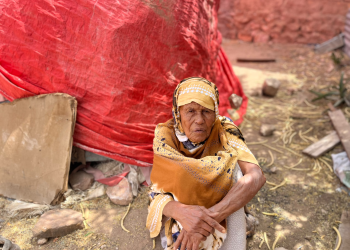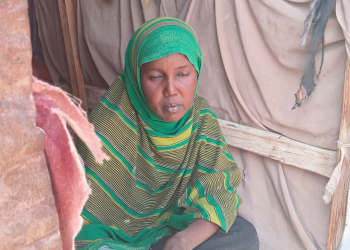


(ERGO) – Somali families living in an area of low land lying just outside the Dadaab refugee camps in northern Kenya have lost the little they had in recent heavy rainfall.
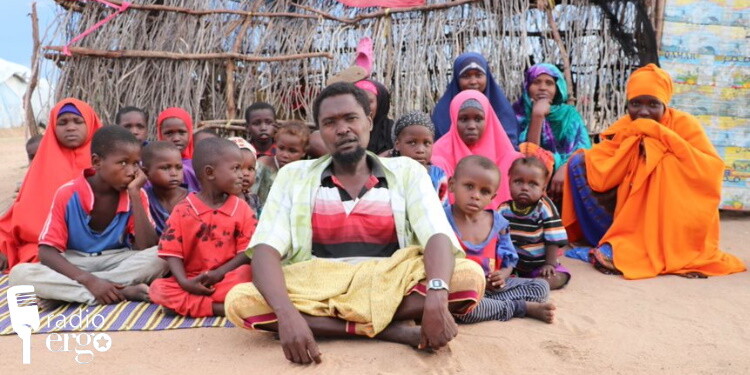
Diini Ali Osman said the rain that began on 24 March washed away their huts made of sticks and pieces of cloth and he does not know how they will reconstruct again in the ongoing rain.
“The rainfall was heavy – those broken houses over there are mine,” he said, gesturing to Radio Ergo’s local reporter.
“We don’t have mosquito nets, we don’t have anything. Our food has been soaked in the water. We don’t have anything now and we are hungry.”
Diini and his three wives and 13 children were living in three huts clustered together since coming to Dadaab last August. They migrated from Harale village in Jilib district, Middle Juba, where their farm was ruined by long drought and water shortage.
“We are facing more hardship than we had faced on the other side,” he complained. “We don’t have houses and we are far from the camp. With the rain starting life is getting unbearable. We don’t have anything. We are in the month of Ramadan and all we have had to break our fast in the past two days are half a kilo of dates that some people passing in a car gave us.”
Diini said they had received registration cards but no aid since their arrival in Kenya and were living without any basic services at all.
A more recent arrival, Hawo Mansur, and her four children had to move in with their relatives in the camp after losing their own hut in the rain.
“When we came to the camp, I was given a small hut by my relatives and now it has been washed away, so we don’t have a house or a toilet. There is a food shortage in this area. My children and I have nowhere to sleep. We are also fasting and we have to break our fast with whatever people give us,” she said.
Hawo arrived in Dadaab on 18 March with four of her children, leaving the other four children behind with her husband in Baladul-Karim village in Middle Juba. They are farmers who have suffered successive crop failure due to the drought and decided to move half the family hoping to find aid in the camps in Kenya.
“We were farmers and we were forced to come to Kenya because of food and water shortage. We reached here with help from some of our relatives as my husband is poor,” she said.
Nurto Hussein Ali, 33, another refugee mother of seven, separated from her husband and came to Dadaab from Herale village in Jilib last September. Their farm had been ruined by drought.
“The heavy rainfall has wreaked havoc, we don’t have houses or toilets. We had some food given to us by people here that was washed away by the water. Today at sunset we don’t have food because we haven’t been able to cook anything. The children don’t have clothes, and there is no bedding – there is no life!” Nurto said in despair.
“I have a huge burden because I am a single mother. I go out to wash clothes and that is how I provide for my children. I am living here with my brother who is disabled and we are eight people. My brother can’t work and I have to struggle to provide for my family,” she said.
The leader of this area called L-10 ward, Sharif Adan Abdille, said people had pitched camp there despite it being a low lying area prone to flooding because they had no access to shelter and other services including water in Hagadera camp, less than a kilometre north.
“These families are living in a difficult situation, the area where they are living was not given to them by the aid organisations and they settled there themselves.
They don’t have houses or toilets. They just gathered branches from algoroba trees and pieces of cloth to make shelters. They were living there until the rainfall started when their belongings were washed away by the rain,” he said.
Sharif stated that an estimated 380 families live in the settlement, having come from regions of Bay, Bakool, Gedo, Lower and Middle Juba in Somalia.