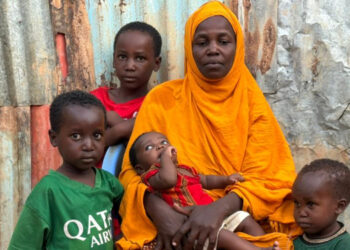
(ERGO) – Somali mother Sahra Farah Guled, 58, is making good money these days as a broker in the livestock market in the southern town of Luq, Gedo region.
She has taken over as family breadwinner, as her elderly husband cannot work, and has managed to put four of her eight children in school, including three in secondary, paying $51 a month in fees.
The $4-5 she earns a day, depending on sales in the market, enable her to cook twice a day for the family.
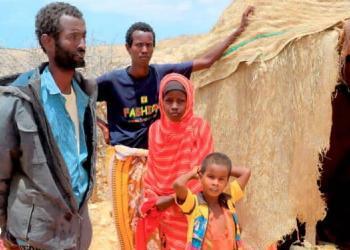
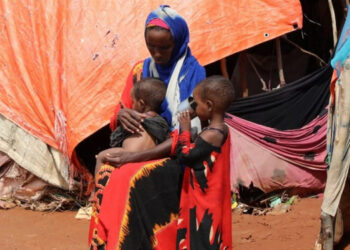
It is a remarkable achievement given that Sahra and her family had been living in Wadajir IDP camp in Luq, since being displaced by drought from their village of Funijo, 18 kilometres from Garbaharey. They lost their entire herd of 60 goats and came to the IDP camp to access aid from NGOs such as Trocaire and World Vision.
The aid flows dried up in 2020 after the COVID19 outbreak took hold. But despite the difficult economic times, Sahra joined the previously male-dominated livestock sector and became good at the job.
Determined to improve her family’s living conditions, she joined a local women’s savings and loans group. She saved $3,000 from livestock brokering and received $1,800 from her relatives. This enabled her to buy a plot of land, where her family now lives in a one-room house.
“I saved money from the livestock market and used to contribute 20,000 to 30,000 Somali Shillings to the saving scheme every month. I saved up my money and bought a piece of land that we have now built on and my children have a home there,” she said proudly.
There are around 40 displaced women in Luq who have given up waiting for aid and sought new opportunities working in the livestock market as brokers.
Fadumo Garane also joined the market and sells five to 10 goats a day, earning between 10,000 to 20,000 shillings ($0.3-0.7) from each goat depending on their sale price.
“I find potential buyers and present a price, if they don’t accept my offer then I present other options. When they agree I sell the animal to them and I keep my brokering fees,” she explained.
This mother of nine provides two meals for her family every day, whereas they used to live on loans from food stores.
“I was struggling to pay the debts, now I get vegetables and a quarter a kilo of meat from the market. Thank God I don’t sit around while my children are hungry. If I get $5-10 a day, their breakfast and dinner is set,” she said.
Her husband has been working as a farm labourer in Burdhubo for the past two years, earning a share of the produce at harvest time. This season, however, the onions on the farm where he worked failed due to pest infestations and water shortage as the Juba River was low.
Fadumo’s income was therefore critical for the family, although she hopes to take a rest from work once her husband can get a regular income and support them.
The head of the brokers association in Luq livestock market, Hassan Abdi, told Radio Ergo that the number of women in the job has increased since 2020.
“These women were hit by drought and forced to join the livestock market as brokers and investors. I helped them join the market, and now they are even better than us, the men! More and more women are joining the livestock market, and the reason is because the aid handouts have reduced. Now women brokers are in the majority,” he said.
Ten other drought-displaced women have invested in the livestock market, and are making a decent living buying livestock and reselling them at a profit.