

(ERGO) – An independent non-profit organisation in Puntland has conducted a new study revealing sectors of economic potential that could help address the problem of unemployment and increase people’s prosperity, especially in rural areas. Puntland Development Research Centre (PDRC) has released the first phase of a six-month research project, funded by the Netherlands government, which focuses on the untapped resources in the regional state in north-eastern Somalia.
The research was carried out in six remote towns: Boame in Sool; Badhan in Sanag; Godad in Mudug; Cuun in Nugal; Bandar Bayla in Karkar; and Ufeyn in Bari. In each case, the study identified opportunities for business investment that could pay dividends for local communities.
Radio Ergo’s local correspondent Abdiweli Mohamed interviewed one of the researchers, Arshe Mohamed Said, about their findings and plans.
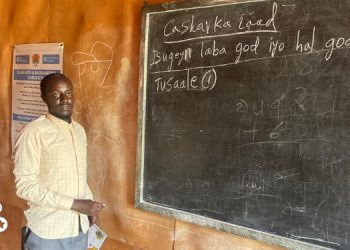
Arshe Mohamed: The research studied the main sources of income in Puntland state and the larger Somalia, so fishing, farming and livestock were among the sectors we focused on. We examined how these sectors could be improved to reduce employment and skills gaps. Our target research population were the youth and women, so we went to remote towns and interviewed women, youth, as well as older persons, to get a large pool of information and data.
We showed the participants films and introduced them to award-winning entrepreneurs who were with us. We formed discussion groups for our research participants. Yesterday, we presented the responses we received from our research subjects to an audience of government officials, businessmen, bankers, university lecturers and and students.
Radio Ergo: What did you find out in your research?
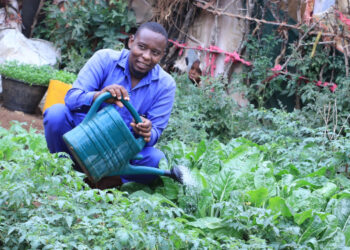
Arshe Mohamed: We found that most of these resources are slowly being eroded. You will see a number of foreign vessels fishing in our seas. The threat of illegal fishing is a global phenomenon and Somalia is extremely vulnerable to this, and we need to protect our waters for our people to fish for business purposes. There has been a notion that Puntland cannot to support farming, which has been debunked in our study. Many farmers in Puntland have now embraced farming as a new sector, but there is a huge need to encourage farmers and help them with pesticides, crops and training.
We found out that camel milk, which is sold in cities at a good price, has not attracted any investment. If you compare the current price of one litre of milk to that of petrol, petrol goes for $0.60 in Puntland while milk retails at $1.3, which is double the money. There are an estimated 25 petrol retailing companies in Puntland, but there is none selling milk. The milk sector is completely informal and overall, the economy is losing out a lot in this sector, which needs investment.
Radio Ergo: What is PDRC’s aim with this research?
Arshe Mohamed: Our aim was to raise awareness so that women and youth can find employment in these resource sectors. Secondly, we wanted the government and businesspeople to realise the economic opportunities that are going unnoticed in the country, so that they can invest in them.
Radio Ergo: What informed your choice of the six towns you based your research on?
Arshe Mohamed: We chose the towns based on their resources. For example, Godad town on the outskirts of Galkayo is famous for camel milk. Bayle is known for its fishing activities. We are not yet done with our research, what we released was just the first phase. We are now conducting a second phase that will involve a larger population.
Radio Ergo: What type of investment is needed in the towns you have studied so far?
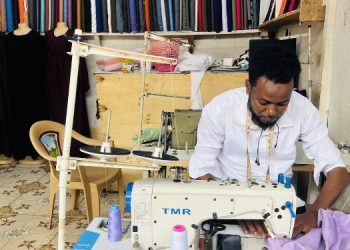
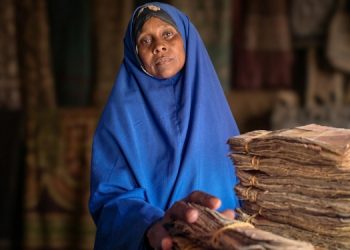
Arshe Mohamed: Already there are small-scale informal businesses run by Somali women that deal with farming, fishing etc. What we want now is large-scale investment to boost these businesses. We are calling on the banks and other money-lending institutions to give loans to these businesswomen.
Currently, farm produce is expensive because there is a lot that goes into the production. The generator used to irrigate the farm runs on petrol, which costs money. We are asking businesspeople and the government to help these producers to install solar-powered generators, which will reduce the price of farm produce. The same goes for camel milk sellers, they need a company to help them produce branded bottles for their milk. There are business opportunities here that with good investment can improve the economy and create work for our people.
Radio Ergo: What does the second phase of your research entail?
Arshe Mohamed: In the second phase we will be implementing based on the findings of our research. For example, we will train youth, raise awareness, build their connections and a lot more activities that can be done. Our data in the first phase of our research will be the input for the second phase. The final report is hoped to be released in July. The implementation of our findings will take time, but we have created awareness among the government and the business community. Already, there are discussions around how to invest in these sectors.