Radio Ergo - Somali Humanitarian News and Information
  • Home
  • Topics
    • Latest Stories
    • IDPS/Refugees
    • Natural Disasters
    • Health
    • Social
    • Food Security
    • Education
    • Agriculture & Livestock
  • Programmes
    • Locust Programme
    • Farming Programme
    • Radio Doctor Programme
    • Women Programme
    • Entertainment Programme
  • About Radio Ergo
  • Contact Us
  • blankSomali
  • blankEnglish
No Result
View All Result
Radio Ergo - Somali Humanitarian News and Information
Home IDPS/REFUGEES

Somali pastoralists turn to fishing – and wish they had done so sooner

Radio Ergo by Radio Ergo
March 16, 2018
in IDPS/REFUGEES, LATEST STORIES
0
Xoolo dhaqato kalluumeysato isu beddelay

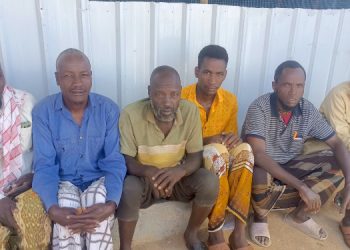
Siciid Aadan Cali oo kamid ah xoolo-dhaqatada kalluumeysatada noqday oo u warramaya weriye Ilyaas Cabdi Cali/Ergo

0
SHARES
Share on FacebookShare on Twitter

(ERGO) – 

Said Adan Ali, 64, grew up herding the family’s livestock and had spent his entire life as a nomadic pastoralist until he took up fishing along the Berbera coast in Somaliland at the end of last year.

Changing circumstances due to prolonged and perennial drought forced him to change from his culturally proud lifestyle and turn to the sea.  He is glad he made the move.

“There is nothing now in the rural areas, the livestock are killed by the drought every year,” Said declared.

All of Said’s family livestock died in the drought. By July, he had decided to give up the nomadic way of life and to leave his family in Mandera, 100 km west of Berbera, while he looked for a different way of earning a living.

He worked as a porter at Berbera port for a while, but then joined some relatives who had already been attracted into fishing. They taught him everything he needed to know in just 10 days.

“We earn more than we used to get from livestock,” Said told Radio Ergo. “I would have come to the coast earlier on if I knew fishing was more productive than the pastoralism life. We don’t need big investments to start fishing and it takes no time at all to make a profit.”

When other fishermen finish their day’s work, Said works overtime to cover his family’s needs.  He earns around 100 Somaliland shillings a day ($10).  He hopes to bring his family to Berbera in the next two months to enroll his children in a local school.

Income from his fishing has already enabled his family to set up a new stall in Mandera, selling small items. Three of his older children now attend school in the village.

Fadhi, another pastoralist for over 30 years, told Radio Ergo he found fishing much easier than livestock keeping.

Some days he sends fish to his family back home. These families never used to eat fish, as the prices are high and it is usually hard to find fish in the rural areas.

All the new fishermen Radio Ergo interviewed said that they are happy to be working in fishing and did not miss their previous way of life.

According to the coordinator of the ministry of fishing in Sahil region (previously North-western region), Ismail Mohamed, 270 men, who lost their livestock in the prolonged drought, have turned to fishing in Berbera in the past two months.  They come from Mandera, Lasidle Abdaal, Ma’aneye, Lafarug and Gololey in Togdheer and Sahil regions.  Their arrival brings the number of fishermen in Berbera to 2,500.

The Somaliland ministry of fishing donated 50 nets and fishing equipment to the new fishermen, funded by the European Union. The first pastoralists to arrive at the coast last August were given priority. The ministry of fishing does not tax their income and there are no license requirements.

Fadhi Mohamed and his family of eight also suffered the effects of drought in the rural area of Lafarug, 85 km west of Berbera.  Only 50 of his herd of 200 goats survived the drought.  Fadhi decided to come to the coast to fish, leaving his family to tend for the remaining skinny goats nobody wanted to buy.

A relative working on the Berbera coast for 12 years trained him in fishing skills in October. Fadhi told Radio Ergo he is planning to sell off his goats as soon as he can get a buyer to buy a small boat. He aims to earn enough income to become independent of his relatives.
 

Previous Post

Hundreds fleeing southern Somalia’s troubled Middle Juba fall into asylum limbo in Kenya’s Dadaab camps

Next Post

Water prices skyrocket for Bari villagers in Qandala as well pump breaks down

Related Posts

Fishermen in Bosaso call for cold storage facilities
FOOD SECURITY

Mudug pastoralists turn to fishing after losing livestock to drought

November 21, 2026
Displaced girls and women enjoy school under a tree outside Mogadishu
EDUCATION

Displaced girls and women enjoy school under a tree outside Mogadishu

November 20, 2026
Somalia live news, Somalia latest news, Mogadishu live news, Somali news
FF Feedback

Radio Ergo audience feedback report 12-18 Nov 2026

November 20, 2026
Many out of work as poor roads and conflict cut off Baidoa city
FOOD SECURITY

Many out of work as poor roads and conflict cut off Baidoa city

November 19, 2026
Farmers kicked off the land that feeds them for Garowe airport expansion
AGRICULTURE & LIVESTOCK

Farmers kicked off the land that feeds them for Garowe airport expansion

November 17, 2026
Sharp knives bring success to women butchers in Bakool
FOOD SECURITY

Hargeisa women decry threats to keep them out of animal slaughter trade

November 16, 2026
Next Post
Biyo la’aan ka jirta degaanno ka tirsan garbahaarey

Water prices skyrocket for Bari villagers in Qandala as well pump breaks down

FOLLOW US ON FACEBOOK

DAILY PROGRAMMES

IDAACADDA 21-NOV-2026

IDAACADDA 21-NOV-2026 by Radio Ergo

IDAACADDA 21-NOV-2026
Episode play icon
IDAACADDA 21-NOV-2026
November 21, 2026
Episode play icon
IDAACADDA 20-NOV-2026
November 20, 2026
Episode play icon
IDAACADDA 19-NOV 2026
November 19, 2026
Episode play icon
IDAACADDA 18-NOV 2026
November 18, 2026
Episode play icon
IDAACADDA 17-NOV 2026
November 18, 2026
Search Results placeholder
Radio Ergo Weekly Newsletter
We respect your privacy.
blank
blank
blank

© Copyright 2014 - 2024 Radio Ergo

No Result
View All Result
  • Home
  • Topics
    • Latest Stories
    • IDPS/Refugees
    • Natural Disasters
    • Health
    • Social
    • Food Security
    • Education
    • Agriculture & Livestock
  • Programmes
    • Locust Programme
    • Farming Programme
    • Radio Doctor Programme
    • Women Programme
    • Entertainment Programme
  • About Radio Ergo
  • Contact Us
  • blankSomali
  • blankEnglish

© Copyright 2014 - 2024 Radio Ergo