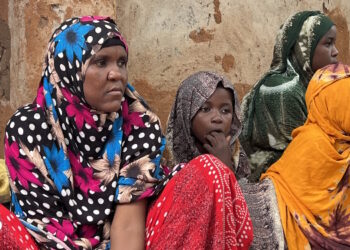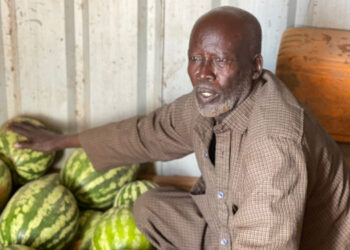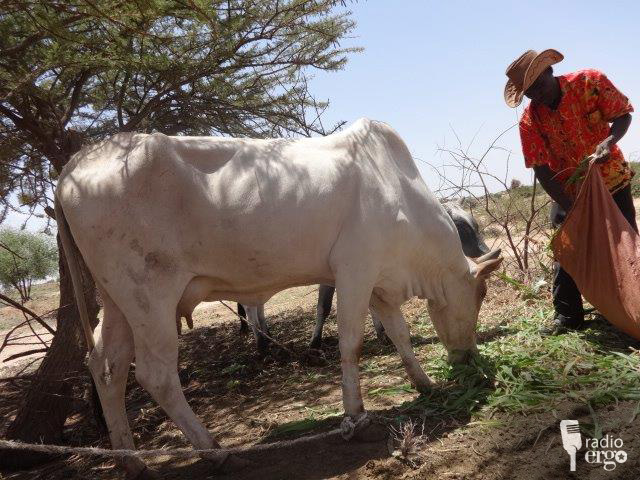


Three hundred pastoralist families migrating away from drought-hit villages in rural parts of southern Mudug have arrived over the past four weeks in the coastal district of Hobyo, where they are struggling to make ends meet.
The herders are from Harardere, El-dibir, El-Adde, Saqiiro and Sugulle villages where water and pasture dried up after three consecutive years of drought.
Hobyo locals are mostly fishermen, whilst the scores of IDPs arriving have no experience in fishing makes it hard for them to find food.
Hiis Mohamed Jimale and his family of nine came from Sugulle village, 28 km from Hobyo. Hiis goes to the beach every morning with his two sons, who are used to herding livestock but are lucky if they are able to catch a single fish in a day.
“We migrated to Hobyo when we got worried about how we could survive. Water is very essential and we are able to get good water here,” Hiis said. They get free water from a shared well a kilometre away.
Hiis, 60, who previously had 300 goats, cows and goats, arrived in Hobyo with only 13 animals.
Habibo Abdulle was in despair after the drought hit in in her village 37 km away and the family’s 200 animals all died. Her husband died and so she took her nine children by truck to Hobyo, using a loan to pay the fare.
Habibo and her children are now living in some small huts they put together using bags and sticks under a tree. The shelters cannot protect them from the expected rain that has begun in parts of the country. Her main worry, however, is finding food for her children, as the rice and flour she got from her relatives is fast running out. She knows nobody to borrow from in Hobyo.
The deputy district commissioner, Mohamed Mohamud Awale, told Radio Ergo it was important that people had a chance to learn new skills to be able to survive in a new environment. Habibo, for example, has no skills to offer in the market place of Hobyo. The authorities say they are discussing with UN agencies support for training opportunities for the displaced pastoralists to adapt to new lifestyles.