Kismayo’s new court system is starting to bring confidence to local people and to address some of the challenges involved in ending lawlessness and bringing stability.
District, regional and appeals courts were re-opened in January this year, for the first time since 1991.
Sheikh Hassan Isak Ali, head of the district court, told Radio Ergo the biggest challenge they were facing now was a shortage of judges. He said people were willing to bring forward their cases to court. Most cases were connected to disputes over land and family matters.
Abdinur Ali, head of the regional court, said since opening on 1 January the courts had been handling civil and criminal cases, with a large amount of time spent on land cases.
“Land dispute cases are the biggest challenge facing the Somali judiciary. When the central government of Somalia collapsed, people grabbed a lot of public and private land. In most cases, both parties fail to prove ownership for lack of the necessary documents to use in the legal proceedings,” he said.
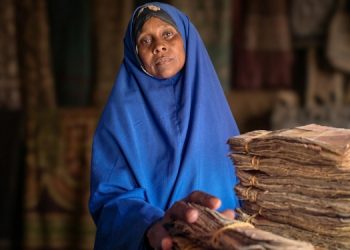
Hodan Hassan Gasle, a local resident, said women had high expectations of the new courts.
“Actually, for us as women, the lack of a functional judicial system was the biggest challenge we faced. There are women who have been married for 30 years and given no rights, women and children have been neglected. Women did not even receive their share of inheritance when their husbands died. Therefore, the advent of a fully functional judicial system is a new dawn for women. We now hope to get our rights!” she said.
Ahmed Takhal, a young resident, said that he had never experienced a functional judicial system but was hopeful.
“I have never seen a court and a legal system, but I think it is a good practice if wronged people can have somewhere to take cases. This is a new system and will not be perfect, so we will have to ask our people to bear with it and have confidence in law and order. This way, we will make a lot of development strides and get lasting peace,” he said.
Crimes of violence, including killings, are currently being settled by communities using traditional ways of solving disputes. The heads of the new courts say they hope to bring such crimes into the domain of the courts, to avoid the problem of criminals being released because compensation was paid.