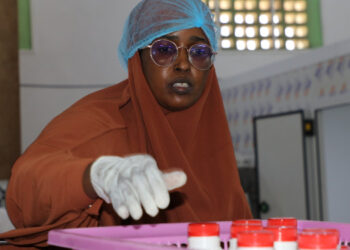


(ERGO) – The closure of two health centres in southern Somalia’s Middle Shabelle region have left thousands of people in the rural villages of Qalimow and Gololey, near the town of Balad, without access to critical free health care including maternal and nutritional support.
In September, the two health centres run by Somali NGO, Zamzam Foundation, shut down due to a lack of funding.
Zamzam Foundation told Radio Ergo that the centres combined had served a population of 51,000 people for 12 years. They offered the sole reliable source of treatment, nutritional follow-up, and safe maternal health services for mothers and newborns in the area.
Their closure leaves the communities facing severe great stress over critical health issues at a time when drought, livestock losses, and failed harvests have already severely weakened household resilience.
Shukri Ahmed Hassan, 22, is eight months pregnant and has not had any antenatal care for three months, since the health centre closed. She says her health has deteriorated and she feels weak and in pain.
The nearest alternative health centre is in Jowhar, nearly 30 kilometres away. Going there requires money for transportation, as well as money to pay for medical services on arrival.
Shukri said she had always depended on the Qalimow centre, where her three children were born over the past nine years. This time, in her final month of pregnancy, she is anxious due to the lack of access to medical care.
Her family is struggling financially and is in debt. She owes a local pharmacy $100 for medicines bought on credit for her own malnutrition and for illnesses affecting her children, including watery diarrhoea, fever, and vomiting.
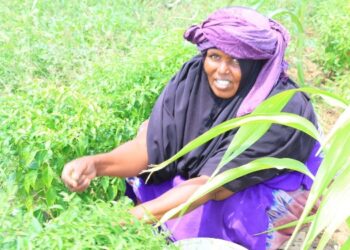
Shukri’s husband is unemployed and has no stable income. Their three-hectare farm growing maize, millet, beans, and vegetables has been unproductive for eight months due to lack of rainfall and water shortage.
The last crops they planted in October dried out before maturing, leaving them with nothing to harvest, and no money. Food is therefore short in her household, as well as in the wider community.
The two centres provided free treatment to pastoralists and farmers from 94 villages across the district of Balad. Their closure comes at a time when these communities are struggling with prolonged drought that has ruined livelihoods, weakened livestock and led to failed harvests.
Maryan Gure Mohamed, 29, was among the last women to give birth at the health centre in Gololey before it shut its doors.
She is breastfeeding her baby born in September, but says her milk is not enough because she lacks adequate food and misses the nutritional support she used to receive.
She told Radio Ergo that when the centre was open, mothers and children were treated for conditions such as diarrhoea, vomiting, and malnutrition, and were provided with biscuits and supplementary food. Pregnant women were monitored and supported to gain weight.
Maryan’s family, who make a living selling milk from their livestock, have been in crisis since mid-2024, when a combination of disease and lack of pasture killed 98 of their cattle.
Only two cows remain, and they don’t get enough fodder so produce little to nothing, leaving the family with no meaningful income.
Local leaders say the health centre closures have led to many women being unable to deliver safely. Mahmoud Nur Hassan, 62, a member of the Qalimow health committee, said many women had been taken to medical facilities in Jowhar over the past three months due to childbirth complications.
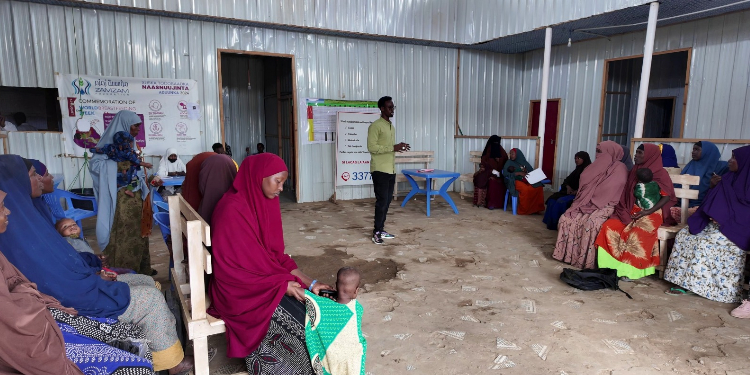
He said he knows of 18 such cases in the village, including several women who required surgery. Private pharmacies often sell low-quality drugs, while the health centres used to provide reliable medicine that families depended on.
Mahmoud himself relied on the centre to support his household of four wives and 26 children. With no facility nearby, he says they are exposed to health risks that they cannot manage on their own.
In the first eight months of 2025, 1,416 women delivered in the two health centres – an average of more than five births every day. Another 1,138 children were monitored monthly for nutritional issues.
Zamzam Foundation’s head of health and nutrition, Subow Mohamed, said the crisis in Qalimow and Gololey is the worst in a decade. The organisation is trying to secure new funding but pledges from potential donors give no guarantee of reopening the centres.
Across southern Somalia, eight hospitals, 40 health centres and 300 nutrition treatment sites have closed this year so far, due to shrinking international aid.
Meanwhile, elders and women in the affected communities say they have raised their concerns with aid agencies and Hirshabelle authorities but have received no response.