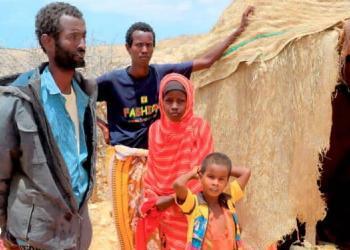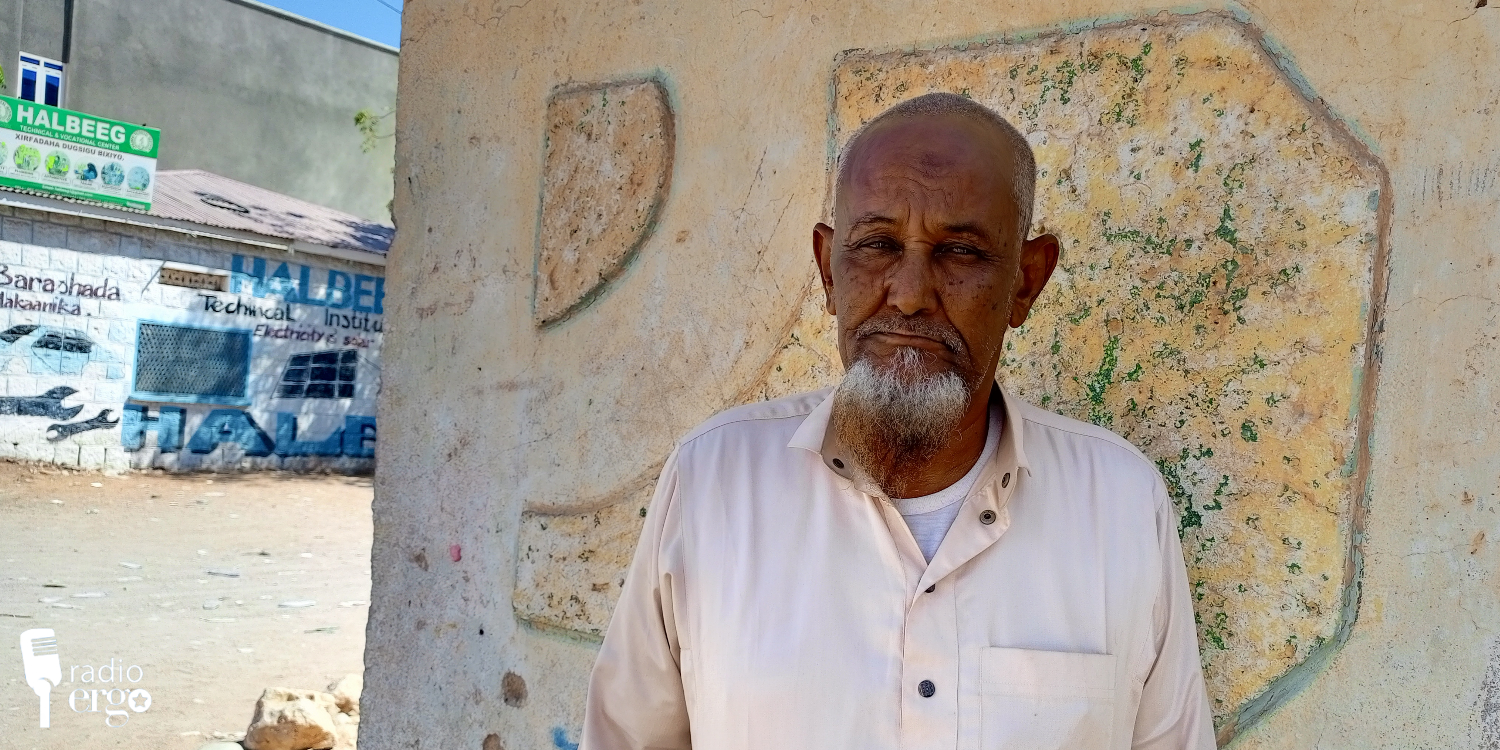
(ERGO) – Seventy-year-old Ali Sulayman Ahmed, a pastoralist all his life, cuts a sorry figure alone in Burao, hoping to treat his infected leg and also find emergency supplies to send back to the family he left behind in their drought-stricken village in a now barren part of Somaliland’s Togdher region.
Ali walked many of the 85 kilometres to Burao, despite having a swollen leg, and hitched a ride for part of the way, from their village of Hood.
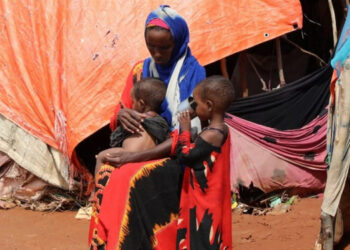
His two wives and total of seven children remained behind in Hood, where there is hardly any food, no water, the livestock are either dead or in poor condition, and those families with means have left to cross the border into Ethiopia.
“One of my families had between 50 and 60 goats that were killed by the drought, as they had nothing to eat. These goats had no market value. If they could have been sold, I would have used the money to move us away. But such drought-stricken animals can’t be exported or moved, they can’t walk, and they have no value,” he told Radio Ergo’s reporter in Burao.
The loss of those goats occurred in August. His second wife and family still have 70 goats, but they are all emaciated and don’t produce any milk and have no market value.
Ali sought some ongoing treatment for his infected leg in Burao and is still there, whilst his wives and children remain among the 60 or so families in Hood village, where life has all but ground to a halt.
The families are still there because they lacked the money to migrate away with their livestock. Families with more resources recently packed up and left to cross the Ethiopian border into Somali Region, where they heard that rainfall recently revived some areas of pasture.
Ali couldn’t put together the $600 to hire transport for his family and remaining animals due to his earlier losses.
“We have been facing prolonged drought that spared neither the recent Gu’ nor the Deyr. The land has no water and no pasture. Those who were able to move have already left – the people who found money and transport. They migrated to Ethiopia. People like us remained behind – there is severe and long-lasting water shortage and drought here. We lost everything that we could have used [to pay] to migrate,” he told Radio Ergo.
Relatives helped Ali access treatment for his leg and gave him 20 kilos of flour, rice, and sugar that he planned to send back home, knowing it would last only a few days.
The drying up of reservoirs, hand-dug wells, and shallow catchments in this part of Togdher region has led to a crisis.
Commercial truckers sell a single barrel costs for $6 in Hood, which the households left behind can’t afford. Families have formed small groups to borrow water from one another, but many are now being rejected as their debts grow beyond what neighbours can absorb.
As well as Hood, other villages Haydara, God’aamo, Qoryaale present similar pictures of destitution and abandon.
Farah Jama Abukar and his family of five stayed behind in Hayira, after losing 70 goats to hunger and thirst, wiping out the family’s livelihood.
The village shops they relied on for small loans for food and basics have closed due to the economic collapse.
“All the shops were closed because of bankruptcy. The owners locked them and left. There is no one left to lend a big or even a small loan. They give credit when you have some assets or if your livestock are in good condition, otherwise they won’t get paid back. The shops that we relied on are all closed,” Farah said.
Farah says he gets occasional assistance from travellers passing through. His biggest concern is water. Families often go a whole day without water that makes life unbearable and worsens the condition of the livestock.
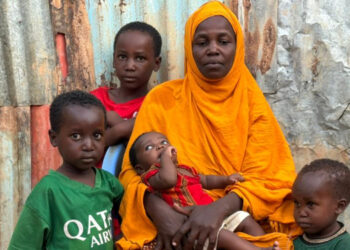
“The well-off families migrated. Those of us still here are equal in our difficulties. No family is better off than another. Around 70 families remain. Originally there were about 200 households, about 130 left. Those who stayed are equal in poverty, equal in weakness, and equal in lack of money. Nobody here can help another as we are all stuck,” he said.
Farah had only 30 emaciated goats left when Radio Ergo spoke to him for this report.
Several attempts to move them to Somali Region failed as the animals weakened further and no transport was available. He fears the herd will not survive another dry season.
Residents in Hood and Hayira also report that groups of men are cutting and burning trees to make charcoal, causing deforestation that is accelerating land degradation and deepening the crisis.
Local administrators say hundreds of families have abandoned the villages of Hayira, War-Idaad, Ilka-Adey, and Hood in the past two months alone, after successive Gu’ and Deyr rains failed.
Adan Abdi Ali, an environmental specialist in Burao, urged the authorities to prioritise water storage, fodder production, and protecting grazing reserves.
“We must safeguard water and store it in reservoirs during the rains. Fodder must be grown so livestock have something to survive on during drought.
Trees must not be cut so that degradation does not worsen. Grazing reserves should be fenced and protected so that animals have somewhere to retreat during crises. This is essential!” he advocated.