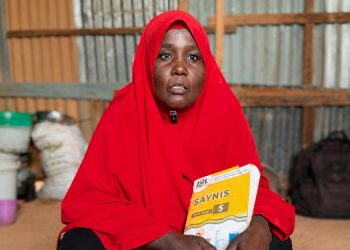


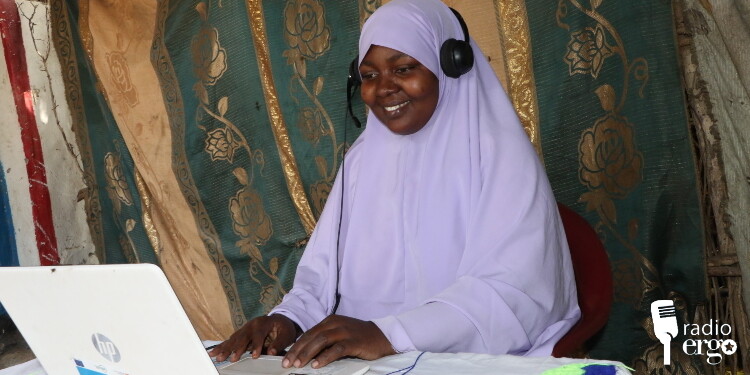
(ERGO) – Hawo Mohamed Abdi, 29, a Somali refugee mother living in northern Kenya, is happy working as an online translator and interpreter making good money to support her two children despite her difficult background.
She started this online work in March following a six-month training course in online business at a skills development centre in Hagadera camp in Dadaab. She bought a computer and installed internet in her house in the camp, so she could work at home and take care of her two children.
As a single divorced mother, who was forced into marriage whilst at school, she is pleased to be able to support her children on the $500-600 a month she earns.
“Before I started this work our life was difficult. My children and I were living with my mother. When I got the skills our life transformed. I’m happy with our situation now, I’m an independent person and I don’t need other people today,” she said.
Hawo was forced into marriage at the age of 20 when she was in her first year of secondary school. She was married to a man from abroad whom she hardly knew at her parents’ insistence. She said he took advantage of their poverty knowing her parents desperately needed the dowry money.
“I got pregnant while I was still in school. I went through difficulties, I gave birth and he was away for three to four years, but I didn’t stop learning so I continued with my school. Eventually I told him to divorce me since he wasn’t coming back,” she said.
She got her divorce in 2018 whilst pregnant with her second child. She found a job with the Refugee Consortium of Kenya earning $70 a month but the money could not support the family so she had to move in to her elderly mother’s house.
In June, however, Hawo was able to buy and renovate a wooden two-room house for herself and her children with the $1,500 she saved from her online earnings.
Also inspired by the same online business course was Abdullahi Abdirahman Nur, 36, now earning a similar amount as Hawo offering English and Somali translations online.
He started this work in January and has been supporting his family of eight people, who had been struggling to get one meal when he was working as a volunteer.
“I was a teacher offering my services free of charge. When I saw this opportunity I took the chance and I’ve learned how to offer my services online and made some income and savings,” he said.
Abdullahi moved to Dadaab in 2006 alone at the age of 18 hoping to get an education. He left his family behind in Beledweyne and successfully completed primary and secondary education.
Despite his education, he has been struggling to help pull his family from poverty. Last year when he learned about the online services training he quickly registered.
He has been working on the Upwork platform that connects companies with freelancers around the world. With his income he has bought a decent house costing $2,000 for his parents and relocated them from Kabah village in Hiran to Beledweyne town.
“My parents were in a small village in the rural area and now they’re living in Beledweyne. I have earned the money from providing online services. My siblings are also learning in Beledweyne, I take care of their needs,” he said.
He always believed in education as a way to transform his life and has enrolled his five siblings in school, paying $500 every month on their education.
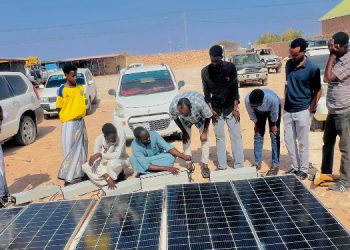
The head of the Youth Education Programme (YEP) centre, Weli Haji Mahad, said they have been offering vocational skills training courses in various subjects including online work, computers, and tailoring since 2018, supported by Norwegian Refugee Council.
YEP has trained around 2,200 refugees in Dadaab camps on skills to make money from online business and freelance work.