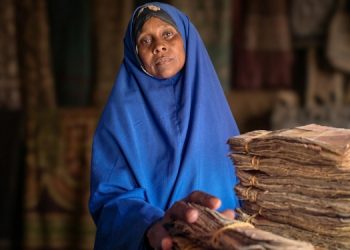


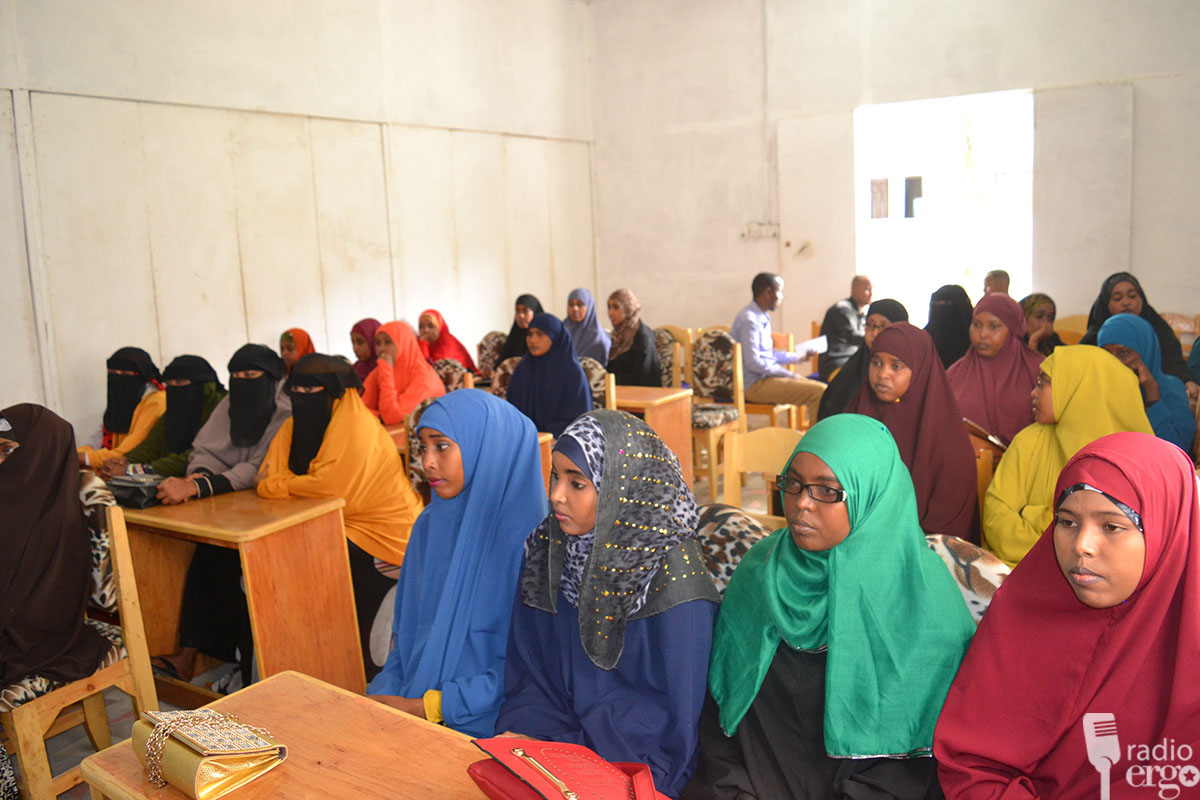
When Habibo Abdi Ali enrolled in 2009 at Mogadishu University, one of Somalia’s most prestigious higher education institutions, she had high hopes of getting a well-paying job to support her parents and nine younger siblings. During her studies, her tuition fees and transportation added to the burden on her poor family, where only her father was employed doing casual work. But three years after graduating with a bachelor’s degree in Languages specializing in English literature, Ali is still unable to find a job.
“I never imagined this could happen.” she told Radio Ergo in Mogadishu. “I have been walking all day, going around the offices of local NGOs and private companies. But I am always told there is no vacancy.”
Abdi has been applying jobs and going for interviews since 2012. In the past six months, she has applied for five vacancies. “I found myself coming up against one wall after another one,” she said. “Most of the jobs are already taken and given to the relatives and acquaintances of those doing the recruitment.”
According to Nasra Abdi Osman, coordinator of a newly launched job placement scheme for female graduates called FURSAD, Ali’s experience is typical of the ever-increasing number of female graduates across the country. “First there is favouritism of relatives and friends when it comes to giving out jobs, but more than that the problem has to do with the fact that those who hire are mostly men and they prefer hiring their own gender regardless of his qualification or that of women because of their belief in men’s superiority,” Osman told Radio Ergo in Mogadishu.
Osman’s words are certainly reflected by the facts on the ground. For instance, only one out of the eight women who graduated with Abdi from the Faculty of Languages and Literature are employed, but all 15 men in their class succeeded in getting a job.
A study conducted by Iftin Foundation, which runs the FURSAD project, showed that women represent around 20 per cent of employees in the education and NGO sectors. But the numbers of women working in other sectors are mostly in single digits. Only eight per cent of employees in telecommunication companies, the biggest employment sector, are women. The research, published in May, stated that most of the employers interviewed preferred hiring men because they did not want to pay women for maternity leave.
The Hawalas, informal cash transfer system, another of the large employment sector, has very few female employees too. When Deqo Ali Omar, a Business Management graduate from Makerere University in Kampala, applied to a hawala in Mogadishu the director told her they had never employed women in their two decades of operations and were not willing to change that culture.
“When they say they don’t hire women, what they are basically saying is that you are not going to get a job there just because you are a woman,” said a bitterly disappointed Omar, who also has a Masters in Peace and Conflict resolution from Kampala University. She now teaches at the Modern University for Science and Technology in Mogadishu.
“The problem of unemployment for female graduates is more acute and will remain so for the years to come not just because women are denied jobs because of their gender, but also because of the lack of family and community support,” said Omar.
Ali, who is the eldest in her family followed by two younger sisters, said both uneducated and educated women have been the breadwinners for Somali families since the civil war began in the 1990s. The men who survived the war became jobless and “baby-sitters” at home while women went out to sell meat, milk, charcoal and khat (leaf with mild narcotic properties) in the country’s most dangerous streets just to feed their families.
“Women have been allowed to work under these difficult conditions in the war time, and now the country is much safer and women are graduates and have professional careers. Women must be supported to go to proper daytime jobs instead of being restricted to running street business till late at night,” said Ali.
Aweys Hadaad, Director General of Somalia’s Ministry of Labour and Social Affairs, believes the time has come to address the issue of women’s employment. Twenty years ago, the debate over women’s empowerment focused on educating the girl child; 10 years ago it moved to ensuring girls’ access to higher education. Both succeeded to some extent. Now women should be given equal access to the job market not for the sake of the statistics but for the best interest of the country’s economic growth and productivity.
“Just like people, each country has two hands – men and women. If you don’t use both hands, that’s your problem not only economically, but also socially and politically because you rely on only half of your potential,” Hadaad told Radio Ergo.
Denying women access to the labour market will be a huge missed opportunity and could have long term effects on Somalia’s economic prosperity. “Both women and men should work in order to increase our production which will lead us to economic growth and development. That could help us to end the dependence on aid and foreign donations,” he said.