

(ERGO) – A market fire that destroyed small businesses, combined with the loss of aid, has set back dozens of displaced families in Dollow, southern Somalia’s Gedo region, who have lost all their sources of income.
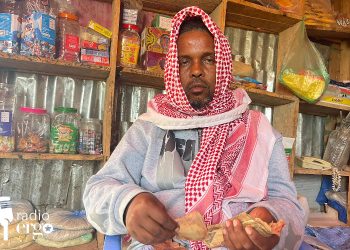
Nunow Mustaf Ibrahim, 35, his wife and two children have been depending on relatives for food since his shop was among those burnt in a fire on 28 December last year. He estimated his losses at $12,000.
“We have nothing now except what relatives and neighbours bring us. Our lives depended on that shop, and it burned down. We had no savings and no other source of income. Everyone is facing hardship,” he said.
Nunow’s shop, which sold food items and household goods, was in the cramped market inside Kabaso IDP camp. The fire destroyed at least 50 small businesses owned by IDPs like Nunow, who had built his business over several years starting by selling small household items door-to-door before opening a shop.
Nunow used to make an average daily income of $6 that covered food and powdered milk for the two children under the age of five. Currently, his relatives can only provide them with two kilograms of rice and one litre of cooking oil every two days that they carefully ration.
“I had to borrow money just to buy milk powder. We are suffering deeply compared to when the shop existed,” said Nunow. “Yesterday I was a shop owner supporting my family. Today I’m standing with nothing, watched by the community. Three families depended on that shop of mine, it was our only source of income.”
A few months before the fire, the food aid they used to get from the UN’s World Food Programme, which included 20 kilograms each of flour, rice, and maize, stopped due to funding cuts.
Nunow has not been able to find any casual labour jobs despite looking constantly. He says limited opportunities and reduced household incomes across Dollow have made work nearly impossible to secure.
The impact of the Kabaso market fire has been widespread. According to camp authorities, each destroyed business employed two to three workers, who lost their jobs overnight. The market also provided food scraps and small donations to extremely vulnerable people, who relied on the traders for their daily survival.
Muqtar Isaq Abdi, another trader affected by the fire, lost goods worth an estimated $11,000. He supports a family of 19.
His shop provided three meals a day to four extended relatives. Since it burned down, his children now struggle to eat even once a day. He says the crisis has pushed them into conditions worse than those they faced when they were displaced from their village by drought.
“Before, I worked in farming. Later, I invested everything into this business so the entire family depended on it. My mother and nephews also relied on the shop’s income,” he said.
They are getting occasional credit from local traders but Muqtar fears that will dry up as his debts mount.
Muqtar opened the shop in mid-2024 using savings from farm labour and borrowed money. His journey to rebuilding his family’s life had been long and painful – in 2016, drought killed their 28 camels and 150 goats, forcing them to migrate to Dollow.
“I struggled for years to rebuild, and now everything has burned. I ask God for help first, and anyone who can support us. When everything you own is destroyed, you need support,” he appealed.
While many traders are unable to recover, a few are attempting to rebuild. Hodan Mohamed Hassan reopened part of her clothing shop using borrowed money to repair sections damaged by the fire.
However, she says she can’t afford to restock wholesale clothing and is visiting warehouses in Dollow seeking additional credit.
“I used to open my shop every morning and work independently,” Hodan said. “Then everything burned and nothing was compensated. We built the shop on debt, and now I need a new supply of goods to sell that we can’t afford.”
Despite her efforts, she has been unable to secure further loans over the past two weeks. Her family of 10 is living in severe hardship, cooking once every 24 hours.
“There are children here who cannot endure hunger,” she said.
Most of the traders affected by the fire had previously lost their livelihoods, either livestock or farming or a combination, to repeated cycles of drought.