

(ERGO) – Hundreds of pastoralist families affected by four consecutive failed rainy seasons have been converging on camps on the outskirts of Garowe in Puntland’s Nugal region.
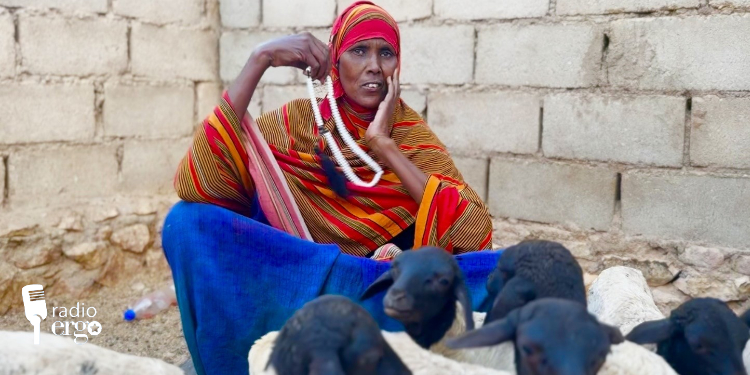
Abshiro Mohamed Elmi, a mother of nine, says her family is enduring the worst hardship they have ever faced.
“We cook once a day if we find something. Sometimes we go without. One of my daughters fainted from hunger when I had nothing to give her. She spent the whole night and day hungry. We are not people who know city life – we were pastoralists. The drought killed our animals, and so we fled to the town,” she said.
They are living in Jillab camp on the outskirts of Garowe, sharing food from others when it is available and sometimes receiving nothing at all.
As she herself is malnourished, she can’t breastfeed her two-month-old baby and has no money to buy powdered milk. At night, she gives the baby water mixed with sugar provided by neighbours.
For water, they rely on about 10 litres per day that they beg from other camp residents who buy from commercial water bowsers that charge 30 cents per 20-litre jerrycan costs. The water is brackish but they have no alternative.
“My children and I walk around with jerrycans asking people for water. If you don’t have money, the water trucks will not give you any,” she said.
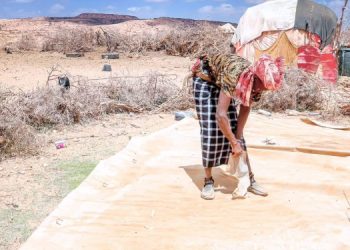
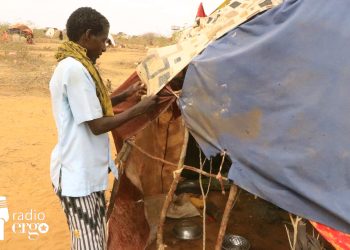
The family lives in a hut constructed from plastic sheets, cloth, and sticks given to them when they first arrived. Three of her children have been suffering from severe coughs and fevers for a week. There is no health facility in the camp, and Abshiro says she can’t afford transport or treatment at clinics in Garowe.
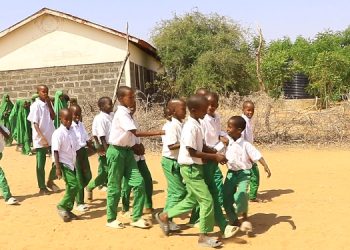
She had been paying $6 for two of her children at Koranic school in their home in Awr-culus village, but she can’t afford the $10 per child charged by schools in Garowe.
This family has lost 300 goats and camels since 2024 due to prolonged drought. Her husband has remained behind in Awr-culus with their remaining 11 camels – though they doubt the will survive without pasture or water.
In the same displacement camp, Fadumo Haji Mohamed, 56, says she spends her day walking through Garowe neighbourhoods asking for assistance to put together a meal for her household of 13 people.
“We came to the city with nothing. We live in a hut that does not protect us from the sun or cold. At night we are afraid of wild animals. This is the hardship we are facing,” she said.
She can’t find any small jobs in Garowe, as so many women are looking and she is unfamiliar with town life. The father of her children is elderly and unable to contribute to the family’s income.
Fadumo also cares for her elderly mother, who is become partially paralysed due to an illness and has been bedridden for a month without any medical treatment.
Fadumo said this is the first time in her life that she has been displaced. Her family lost 62 camels and goats to drought in War-gaduud area in Godob-jiraan, where they had lived as pastoralists. Only eight goats remain, but they produce neither milk nor income.
“We lost all the animals we depended on,” she said. “First there was no pasture, then water scarcity followed. Water shortage was the worst. They died because we could not buy water for them.”
Four of her school age children have never attended school. There were no schools in their rural area, and she can’t afford the fees in Garowe.
Garowe municipality executive director, Abdalla Mohamed Abdalla, told Radio Ergo that drought had severely affected communities across Nugal region.
Since December 2025, they have registered nearly 500 newly displaced families arriving on the outskirts of the city.
“Many people have lost all their livestock,” he said. “The local government cannot meet the existing needs. We were already struggling with families who were here before, and now hundreds more have arrived. We call on anyone who can help to respond to their situation.”
He added that limited assistance had been provided to some families but was insufficient given the growing numbers.