

(ERGO) – Pastoralists in remote villages in northern Somalia’s Sanag region say they have been unable to feed or treat their animals due to lack of money, as the prolonged drought continues to erode their livelihoods and income.
Mohamed Ali Salad once boasted a large herd of 200 goats, but 170 have perished in the drought. Thirteen of the remaining 30 are sick and too weak to produce milk, meat, or fetch a sale price in the market.
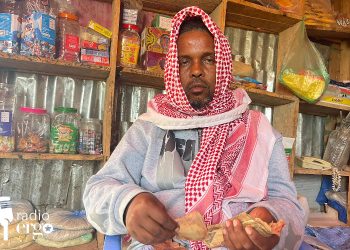
His family of 12 have had no income to depend on since last December. He borrows small amounts of credit from shops in Gurmale village to buy firewood and basic supplies, but sometimes shopkeepers refue him because of his unpaid debts.
“Our situation is hard in every way. We need water, pasture and medicine. I borrow from one person and then another, sometimes I get it and sometimes I don’t,” he said. “We depended on those animals and now there is nothing to sell. The people and the livestock are equal in terms of hunger.”
Mohamed said 30 pregnant goats in his herd miscarried before dying. The young were born dead and the mothers soon followed.
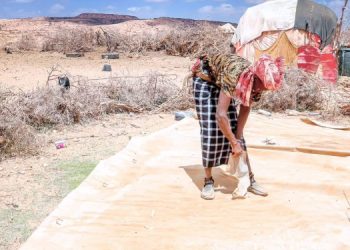
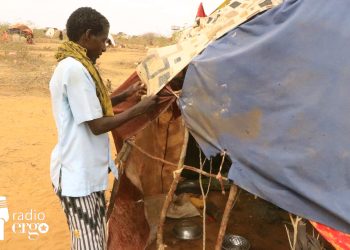
With the harsh jilaal dry season bringing intense daytime heat and cold nights, his family shelters in a makeshift hut made of cloth and tree branches.
They can’t afford to buy water so his wife asks for a single five-litre container of water each day from neighbouring families. It’s not enough for drinking and cooking.
They used to draw clean water from a well in Hingalol, but it has dried up. The nearest alternative source is in Buraan, 85 to 100 kilometres away.
Water trucks charge no less than $170 per delivery and a single barrel now costs $5. Mohamed said the last barrel they received was delivered two weeks ago by local Tadamun Social Society.
Mohamed has $2,000 of debts accumulated over the past 18 months for food, water and household needs. With most of his herd dead and the remainder too weak to sell, he cannot repay what he owes.
Having spent his life as a pastoralist, he said he lacks skills to seek alternative work in town.
Pastoralist in villages such as Sibaye, Gurmale, Qoyan and Jingada are all in perilous situations, with dead and sick livestock and no other means of livelihood.
Ibrahim Ahmed Salah, a pastoralist in Sibaye, lost 57 of his herd of 90 camels and goats. The remaining 33 are weak, some sick, and he can’t afford fodder or water for them. His family of 13 has been unable to meet their basic needs since November.
“Life is extremely hard. We are pastoralists and the drought has hit us heavily. We have no water and very little food,” he said.
“The livestock trade has stopped. There are no buyers and no animals fit for sale. We haven’t had proper relief for a long time.”
In late December, Tadamun Social Society provided his family with 25 kilograms each of flour, rice and sugar, which they have been rationing carefully. He said the supplies are almost finished and they have no other assistance.
Malnutrition and illness are increasing, particularly among women and children weakened by hunger and long-term water shortages. There is no health facility in Sibaaye village, meaning sick residents cannot access treatment.
Ibrahim said pregnant camels and goats in his herd have also been miscarrying and dying. Some goats appear healthy, but when slaughtered their meat is dark and inedible. He worries about the combined impact of disease, drought and debt.
The nearest functioning water source is in Hingalol town, about 120 kilometres away, where water trucks charge $10 per barrel, which he can’t afford.
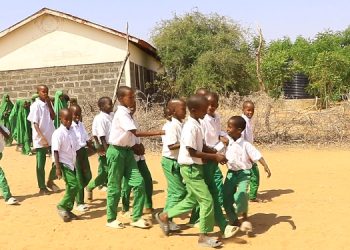
Three of his children who were attending primary school and Koranic classes were sent home last month after he defaulted on three months of the $5 monthly fees.
Veterinary specialist, Dr Farah Guled Omar, told Radio Ergo that some of the diseases reported by pastoralists are linked to prolonged drought and climate stress. Weak animals with poor nutrition are more susceptible to infections such as measles-like diseases, parasite-borne illnesses, and reproductive complications.
Certain commonly used veterinary medicines could help if administered early alongside better feeding. However, he acknowledged that these measures had not been accessible to the pastoralists due to the prolonged drought-induced crisis.