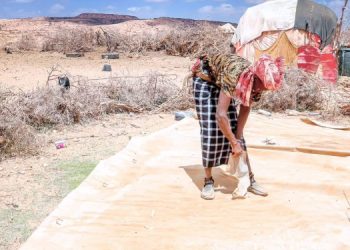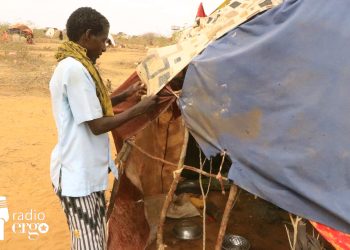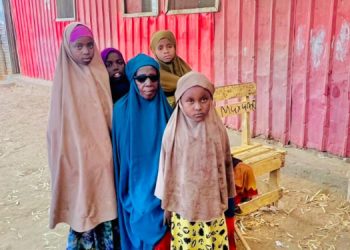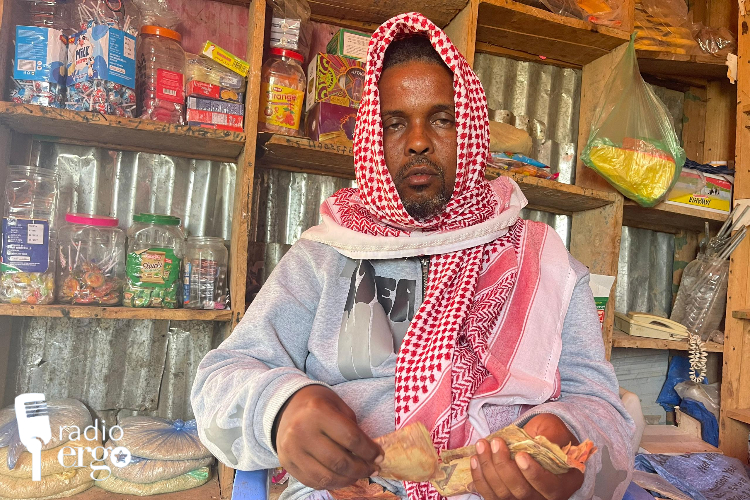
(ERGO) – Families who depended on livestock rearing in the remote areas of Bay region have started small businesses to support themselves since losing their herds to drought and moving to displacement camps in Baidoa camps.
Many have sold their last remaining animals to generate capital for their shift into business.
Liban Deerow Hassan set up a small retail business in Al-Baraka camp in January with $800 he raised from selling his last two cows. He had lost 22 cattle and 11 goats to the prolonged drought. He began selling tomatoes and expanded into shoes, clothes, and general goods.
“When we came to Baidoa, God enabled us to start a small business. Now my family has enough to eat and we are managing well. We only need to grow the business further,” he said.
The income of $5 to $7 a day covers the family’s basic needs and is better than begging for food from other families, as he had been doing.
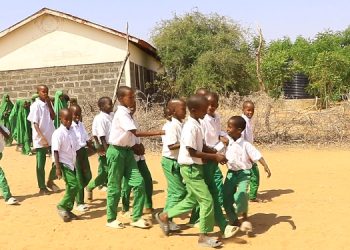
At the age of 70, he says he does not regret leaving the challenges and uncertainty of pastoralism behind him. His seven children started school in February for the first time with a total fee bill of around $50 a month.
“In the past, life was very difficult. The children had no clothes, no food, nothing. Now we have food and clothing, and they are in school,” he told Radio Ergo.
Encouraged by the progress he has made, Liban has so far saved $70 as he plans to move his family out of the camp into more permanent housing. He runs the business from a small structure attached to the hut where he and his wife and children live.
After years of repeated drought, he has no plans to return to rural life: “The drought has become constant and livestock can no longer survive. I have decided to stay in the town, continue the business, and educate my children.”
Liban’s family arrived in Baidoa in December after walking 45 kilometres from Habal Bar-baare village in search of assistance, at a time when they had lost hope in their livestock.
Although there are no official figures, Liban estimates that more than 70 families in nearby camps have taken a similar path to his, by selling their rural assets and starting small businesses.
In Buula Toosi camp, Abdi Mohamed Noor opened a small shop in January with $700 that he says has transformed his family’s daily life. He also makes $5 to $7 a day from the business selling basic food items.
He lost around 100 goats to drought in 2025, forcing him to leave his home in Habaal Bar-baare and move to Baidoa. At one point, he said he had to beg in the streets just to provide a single meal for his 11 children.
He saw others in similar situations improving their lives through small trade and was able to raise capital by selling two hectares of farmland he owned back in his rural village, although the land had produced no crops since early 2025 due to lack of rain.
Now, he is able to support his family, has saved up $90, and enrolled his children in both Koranic and a local primary school.
“I pay $5 per child each month for school,” he said. “What I earn from the shop covers education and daily needs, and I also try to save a little for the future.”
Women are also among those rebuilding their lives through small-scale trade. Fadumo Mohamed Yusuf, a widow caring for seven children, runs a shop selling vegetables and food items in Al-Baraka camp. She started the business in November with $600 after selling three cows, and now earns between $4 and $6 a day.
“When I first came to Baidoa, life was very hard, now it has improved. I can support the children and manage their needs,” she said. “Life was so difficult that I feared I might lose my children because of the conditions we were living in.”
Although her income remains modest, it has enabled her to send four of the children to a nearby primary school, for $20 per month in total fees. She has also saved $120 to cater for future emergencies.
Access to water has also improved for her family as she can afford the cost of $2 a barrel, instead of walking a kilometre to fetch water. Conditions in the camp remain difficult, though, as there are no free services available.
Her family was displaced from Gurbaan village in Bay region in 2025 after losing 18 cows and 100 goats to drought.
Despite the progress made by families like Liban’s, Abdi’s and Fadumo’s, their recovery through small business remains fragile.