

(ERGO) – More than 150 newly arrived refugee families from Somalia are facing severe hardship in Ifo-2 camp in Kenya’s Dadaab refugee camps, since arriving to find no reception or assistance.
The families fled conflict and drought that destroyed their livestock and crops, but say they have yet to receive any formal support. They arrived at a time when registration offices were not operational, leaving them stranded without access to aid.
Among them is Fadumo Abdirahman Ali, who is struggling to provide even one meal a day for her children. She told Radio Ergo that her family had survived only on small amounts of food shared by other refugees in the camp.
“We have received no assistance and no welcome. Since we arrived, we have nothing,” she said. “Last night was the last time we cooked. Even for suhoor (dawn food) we had nothing. Today we have nothing to break the fast with.”
Fadumo’s children go to bed hungry and cry through the night, worsening her distress.
“The hunger shows on their faces. They cry and ask for food – rice, milk, anything – but I have nothing to give them. The suffering here is worse than what we fled.”
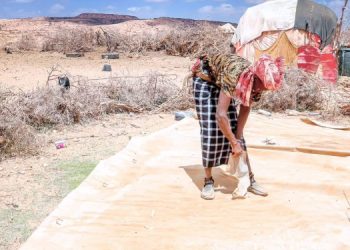
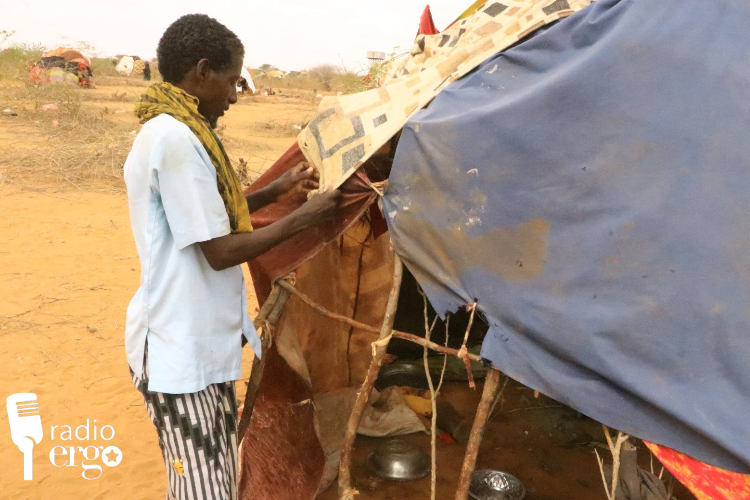
Her family is living in an open area outside the camp, where she has built a small shelter from sticks and torn cloth. The structure offers little protection from the intense heat, which can reach up to 40 degrees Celsius during the current dry season.
Fadumo is a widow caring for nine children, six of whom are orphans. She has no tools, utensils, or resources to improve their living conditions.
“We settled here on our own. No one helped us. Others build with what they have, but I have nothing. Even finding materials is difficult because the children are too young to help” she said.
Fadumo fled Neebsay village in Sakow district in southern Somalia’s Middle Juba region in January, after three consecutive seasons of poor rainfall wiped out the crops on the three-hectare farm that provided their source of food and income.
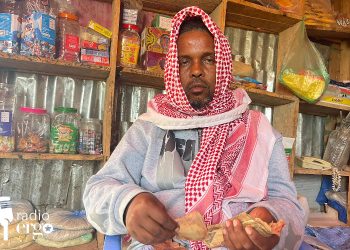
Adan Iidow Hassan is facing similar challenges in Ifo-2 camp, lacking food, clean water, and decent shelter. They depend on small amounts of food his wife collects from others in the camp.
“During this fasting month, we break our fast with very little. The children are hungry and weak. Yesterday and today we cooked only what my wife managed to collect – a few kilos of rice and sugar given by kind people.”
Adan supports a household of 16 people, including his son’s family. They share two small shacks that do not provide enough space or protection.
Access to water is also limited. They collect about 80 litres every other day from a nearby well, which is not sufficient for their needs.
He said the harsh conditions have affected his children’s health, with many suffering from coughs, fever, and other illnesses.
“There is no medicine and no nearby health services,” he said. “We cannot afford transport to take them to a clinic. The children are sick and we have nothing to help them.”
Adan fled Jawaarey village in Bardhere district in Gedo region in January after drought destroyed crops on his four-hectare farm. They came to Dadaab hoping to find assistance to help them recover.
Camp leaders say the number of new arrivals in Dadaab has increased significantly in recent months, but support systems have not kept pace.
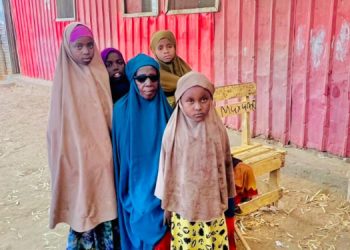
Khayro Ali Sooyaan, chairman of Ifo-2 camp, told Radio Ergo that many families had been forced to settle in open areas under trees due to lack of reception services.
“They arrived at a time when there were no operations in the camp,” she said. “We had no choice but to let them settle wherever they could. Many are living under trees with nothing.”
She described seeing children crying from hunger while parents try to comfort them with whatever little they can find.
“Some mothers boil water just to calm their children, pretending that food is coming,” she said. “It is a very painful situation.”
According to camp authorities, hundreds of families displaced by drought and conflict in southern Somalia have arrived since late 2025, many of them unable to access formal aid due to delays in registration and limited resources.