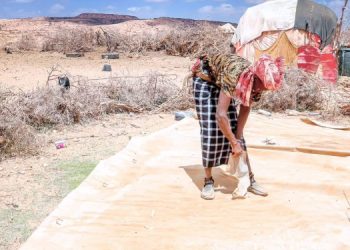


(ERGO) – Hundreds of small-scale fishermen along the eastern coast of Somalia’s Mudug region have been pushed into severe hardship after foreign trawlers destroyed their fishing equipment and drove fish stocks away from the areas where they were fishing.
The fishermen, from the coastal settlements of El-huur, Qosol-tira, Labad and Gaan, say their livelihoods collapsed late last year when large trawling vessels began operating close to shore, damaging their boats, nets and engines.
Among those affected is Muse Ali Guled, who has been unable to provide food, water, or other basic needs for his family. He said three boats he and three colleagues shared were damaged along with their engines, six fishing nets, solar equipment, and other gear. He estimates the total loss at more than $6,000.
“The fish have all been driven away, they shine powerful lights in the water and pour oil into the sea. Thousands of foreigners are out there with large vessels and boats. We can no longer work. The place where we used to feed our children has been taken from us,” Muse told Radio Ergo.
Muse said fishing was the only skill he had ever relied on to support his family of nine, leaving him with no alternative source of income.
Before the disruption, he typically earned between $15 and $20 a day, which was enough to cover food, water, school fees, rent, and other household needs. Now the family survives on irregular help from relatives living in Galkayo and Hobyo.
On the best days they collect about $1.50 from occasional assistance, an amount that does little to ease the hardship facing the household.
“My children are suffering. The youngest is only one-year-old. I was a man who fed his family from the sea, but now we have nothing to put in the cooking pot.”
The family has also been struggling to access drinking water. Muse said water in Gaan is brought from sources about 20 kilometres away through plastic pipelines that frequently break due to heat, passing vehicles, or technical faults.
As a result, the price of a barrel of water has risen to about $10, far beyond what most fishermen can afford.
Another fisherman facing difficulties is Abdi Abshir Geelle, whose fishing gear was damaged after the trawlers moved into the waters where local fishermen traditionally worked.
“They have taken the resources we depended on,” he said. “We are fishermen and we know no other work. We used to provide for our families from the sea but now everything has stopped.”
Abdi said his catch used to fetch him between $75 and $100 a week. But the trawlers destroyed six fishing nets, three engines, seven solar units, and two boats that he depended on for his work.
He is trying to find casual labour in the area, but opportunities are scarce and he makes just $3-4, far too little to support his family of 10.
“I used to go to sea and return with something for my children. Now I leave in the morning searching for work and return with nothing,” Abdi said.
He owes nearly $7,000 for money borrowed to buy fuel for his boats and to buy food and water for his family during the months he has been without work. He has also fallen behind on the $20 monthly rent for the two small rooms where his family lives and has been given an eviction notice.
Local fishing leaders say the crisis is affecting hundreds of households along the Mudug coast.
Abshir Mohamed Farah, chairman of the Bad-maal fishing cooperative operating in El-huur, Labad, Gaan and Qosol-tira, said about 500 fishermen had lost their livelihoods because of illegal trawling. Many had abandoned the sea after their equipment was destroyed or they were threatened and fired upon by foreign vessels.
“These fishermen are in a very difficult situation,” he said. “They have debts and their families are suffering. At the same time the country is experiencing drought, so all these hardships have come together.”
Abshir said the trawlers believed to be from Yemen and Oman have been operating along the coast and causing widespread damage to the marine environment.
“They have emptied the sea of its resources,” he said. “Wherever we go they follow us, and fishermen are afraid to return to the water.”
He added that the Galmudug regional authorities were aware of the situation but had not taken any effective action to stop the illegal fishing. Local fishermen fer being accused of piracy if they take the law into their own hands and fight back.