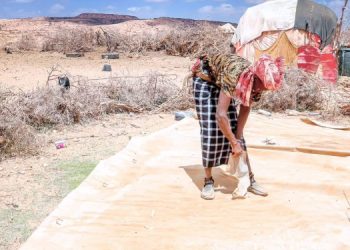


Hundreds of families returning to villages in southern Somalia’s Lower Shabelle region that were at the centre of warfare between Al-Shabaab and Somali government forces last year are grappling with rebuilding their lives in a former battlefield.
Sabiid and Aanole villages are now back under Somali government control, but much of the infrastructure and economic base remain in ruins.
Many families said they felt compelled to return to their homes, despite what little is left standing, after struggling in displacement for months in towns across Lower Shabelle.
Ali Noor Madey, 41, returned to Sabiid in January with his wife and four children after spending nine months displaced in Afgoye. He told Radio Ergo they came back with nothing and life is a struggle.
“In Afgoye we suffered in makeshift shelters. We chose to return to Sabiid because it is our home. We preferred to face hardship in our own land rather than remain displaced. Now we are living in a situation only God knows,” he said.
Ali said they manage just one meal a day, sometimes cooked and sometimes raw food provided by the neighbouring farming families whose property was less affected by the fighting.
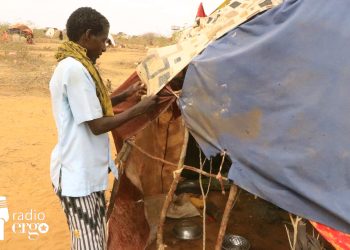
His four-room iron-sheet house was destroyed during the conflict. The family now lives in a small makeshift hut built beside the ruins.
The nearest water source is the Shabelle River, four kilometres away. However, the river’s flow has declined due to the dry season. Ali said families are digging hand-dug holes about one-metre deep in the sandy riverbed and wait nearly an hour for small amounts of water to fill the hole.
This is currently the only source of water for more than 830 families now back home in Sabiid and Aanole, where the wells were damaged during the fighting.
“There is a life here that cannot even be described as living. We dig holes in the sand inside the riverbed to collect water. That is what we drink!. The situation is extremely difficult,” Ali told Radio Ergo.
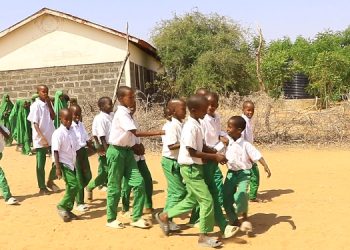
Two of his children have not attended school since last April when they fled the conflict. The local primary and intermediate school was destroyed and has not been rebuilt. Around 700 students remain out of education.
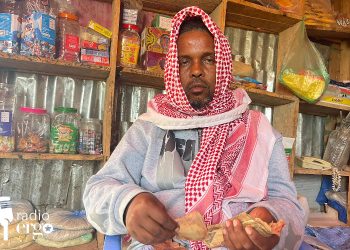
Before the conflict, Ali said he was among the better-off residents. He owned a grocery shop that provided steady income, a three-hectare farm producing vegetables, beans and maize, and an irrigation pump he valued at $1,500. All of these were destroyed.
“If my irrigation pump were still there, I would be farming today,” he said. “My house is destroyed, my shop is gone, everything is ruined. The place that once had light and life is now dark.”
Fighting has recurred in Sabiid and Aanole over the past several years, involving government forces and Al-Shabaab. Airstrikes, shelling and gunfire burned homes and farmland. Residents say they returned without security guarantees and with little external support. Some walked long distances to get home.
Iisho Hassan Mahmoud, 44, also returned to Sabiid from Hubushow camp in Afgoye, 21 kilometres away. Her family of eight faces similar hardship, and they depend on small amounts of food she begs from neighbours.
She left behind a four-hectare farm that once produced beans, sorghum, maize and vegetables. When she returned, she found it burned and grazed over by livestock.
Her family lives in a fragile hut and lacks the means to rebuild their destroyed iron-sheet house.
“I am a farmer. I depended on my strength and my land. Now I have nowhere to work. My children have nowhere proper to sleep. At night there is cold, during the day there is heat. We have nowhere to shelter,” Iisho said.
The chairman of Sabiid and Aanole villages, Mohamed Abukar Ahmed, told Radio Ergo that while about half the residents had returned, the conditions were far from welcoming.
“The area is heavily destroyed,” he said. “People are gradually coming back, but there are still serious humanitarian problems.”
The conflict damaged health services, schools, water points, farms and businesses. Local authorities are planning to organise community self-help initiatives to begin rebuilding, but resources are limited.
The chairman appealed to the regional administration for urgent support.
Lower Shabelle, known as one of Somalia’s key agricultural regions, has endured years of recurring conflict that has disrupted farming and displaced thousands of families. The destruction of irrigation systems, markets and homes has reduced agricultural production and weakened household incomes.