

(ERGO) – Hundreds of families living in small villages in southern Somalia’s Lower Juba region have been cut off by flooding that has left them short of food and unable to pursue their livelihoods.
Abdirahman Omar Dayow and his family of 13 people took their 70 goats out of Hayo village to seek safety from floods on higher ground in October. But continual heavy rains meant that they became stranded in this area seven kilometres from home to which they fled.
They have been eating one meal in 24 hours as their food in store was fast being depleted.
“There is water flowing near us although we are camping now on higher ground – there’s water around us. We are like people on tree-tops who can’t get down,” he said.
His family carried 15 kilograms of rice, flour and sugar with them thinking it would last them until they could return to their house in the village. Floodwater prevented them from moving back to the outskirts of Hayo village, as he feared for the lives of his children and livestock if they tried to cross the water.
He is getting worried about his remaining goats that have not been getting enough fodder.
“I have a few goats that are getting rained on and we don’t milk them, they are very thin and they need their milk. The road networks have been closed, the people can’t move around let alone the animals,” he said.
Prior to this year’s flooding, Abdirahman had already lost 130 of his former herd of 200 goats to the long years of drought.
The villages of Hayo, Taabto, and Qooqani have all been affected by the flooding that has hampered the communities’ access to markets in the main town of Afmadow, about 10 kilometres away. Food prices in the area have been escalating due to shortage and the difficulty of getting supplies from Afmadow or Kismayo.
Some of the people had called Radio Ergo’s feedback line to report their plight and they were called back by Radio Ergo’s local reporter.
Abdirahman says all he can do is hope that the Jubaland state or federal government will be able to help them.
Another pastoralist, Mohamed Rage Mohamud and his 14 children are camped with 20 other families on a different hill in Hayo.
With their food running out, they cannot cook every day, although they are lucky to be getting milk from their 30 cows, which are still relatively healthy compared to their 50 goats.
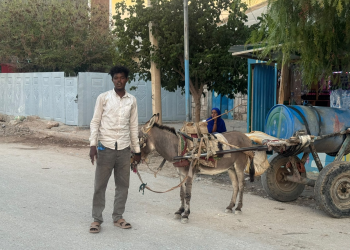
He and other pastoralists on the hill considered using donkey carts to escape from their camp but the water was too deep for the donkeys. A few people who can swim occasionally across the water to bring food supplies on their backs.
“The donkey can’t reach our homes which are about seven kilometres away. The rainfall that started last evening has stopped this evening. We don’t know how our situation will end up. But it’s very hard. We are stressed but we believe in God,” he said.
His family makes a living from livestock sales. He lost 15 goats and two cows washed away by floods in November. Currently he is cut off from the market so cannot sell any animals.
He once owned 200 cows and 300 goats although most of them died during the prolonged drought. He said he hopes he will one day recover from the never ending climate crisis ordeals.
According to Mohamed, he received alerts about heavy rainfall that was predicted and therefore moved from Hayo to the hillside.
The deputy commissioner of Afmadow, Wollow Ahmed Ali, told Radio Ergo the only viable way to reach the people stranded would be by helicopter. He said they desperately needed food aid.
“If the rains continue I believe they could face a desperate humanitarian situation. It doesn’t seem the rainfall will stop. We have reports that the people in Hayo have had heavy rainfall and the water is rising. It is hard to cross the water. Cars and carts can’t navigate the floods, so only God knows how their situation will turn out,” he said.